The haircut library · Decision guide
Hairstyles for Oval Faces: Comparing Your Options
Start with the shape you want to see, then choose a length and texture you can live with.
What hairstyles work for an oval face? An oval face can work with a wide range of lengths, from a close pixie to long waves. The useful decision is where you want the haircut to draw attention—to your eyes, cheekbones, jaw, or neckline—and how the shape will behave with your hair's texture, density, and usual styling routine. A chin-to-collarbone bob, soft layers, or a fringe can each do that in a different way.
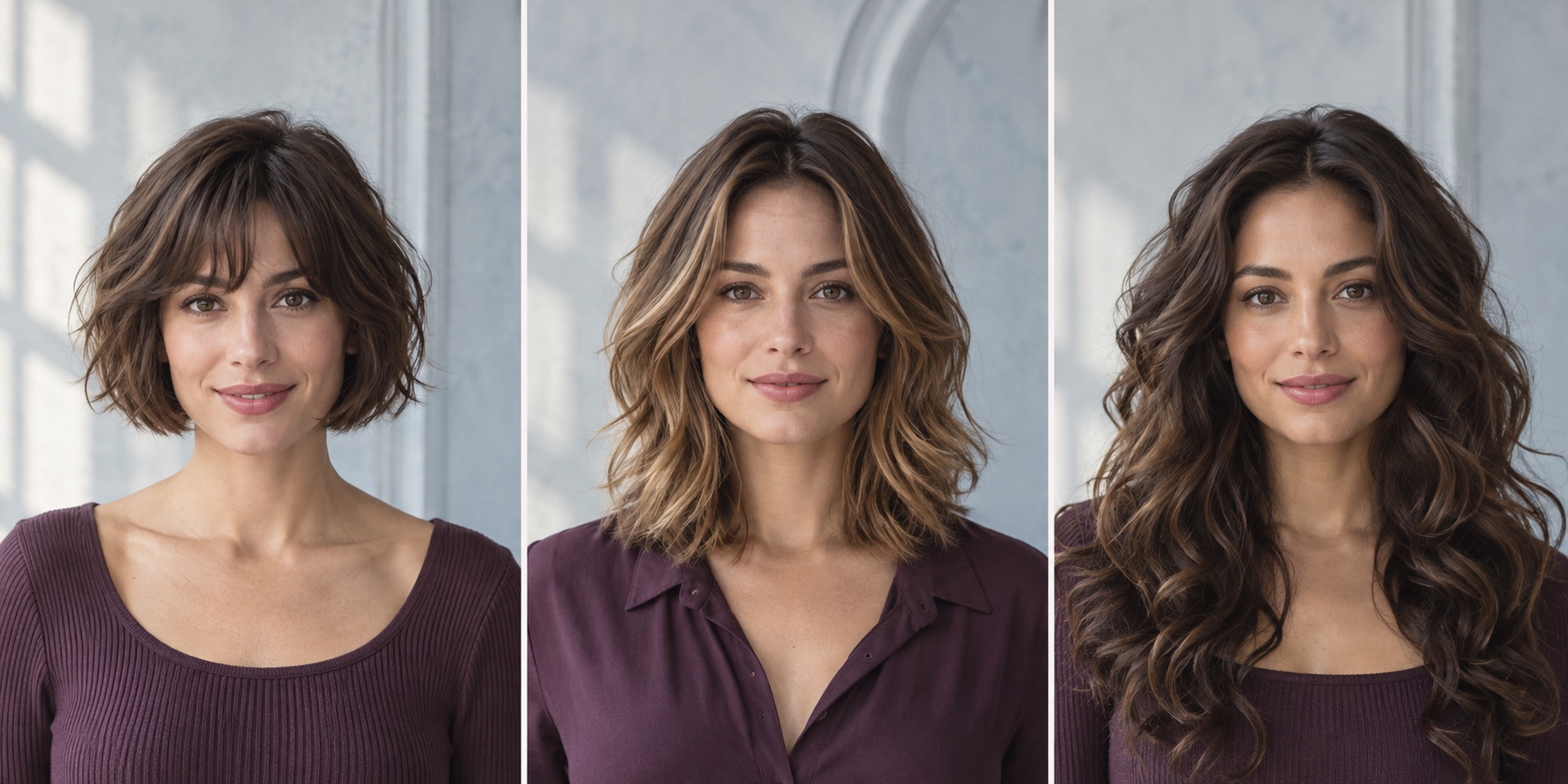
The Oval Face Silhouette: Natural Balance and Endless Versatility
An oval face generally looks longer than it is wide, with a softly rounded jaw. The forehead may look a little wider than the jaw, while the cheekbones give the middle of the face gentle width. These are visual descriptions, not exact measurements or a test you need to pass. Many people see a mix of proportions, and a camera angle or hairline can change how the outline appears.
That softer outline leaves room to choose a haircut by its stopping point. A bob at the chin brings attention to the jaw; a collarbone cut draws the eye toward the neck and shoulders; a pixie opens up the neckline. Long waves make a more vertical frame. None is the required “oval face haircut.” Use the face-shape comparison guide if you want to look at the outline without relying on a single label.
Top Haircuts for Oval Faces Ranked by Hair Texture
Think of these as starting points for a consultation, rather than a ranking that applies to everyone. Check the reference at the length where your hair falls when dry, and ask which parts of the look depend on a blowout, product, or heat styling.
Fine or Thin Hair: The Chin-to-Collarbone Bob
A bob with a clear, relatively solid bottom edge can make the ends look fuller than a cut with many short layers. At chin length, that edge emphasizes the jaw and keeps the silhouette compact. Moving it below the jaw or toward the collarbone gives more length while retaining a visible perimeter. A French bob with a soft fringe is one option if you like the focus around the eyes; a longer bob is an option if you want more room to tie your hair back.
Fine strands and low density are different traits, and either can change how full the edge looks. If your ends tend to separate, compare a mostly blunt line with just enough internal movement to keep the bob from feeling rigid. Ask your stylist to show how the cut will sit after your normal drying routine. The fine-hair guide looks more closely at perimeter and layering, while the bob guide compares the lengths and shapes.
Wavy & Curly Hair: Shag and Mid-Length Layers
Waves and curls can give a mid-length cut fullness around the cheekbones or below them, depending on where the layers begin. A softly layered shag adds a looser, more separated outline; longer mid-length layers keep more weight at the ends. If you enjoy side volume, an oval outline gives you space to make it a deliberate feature. If you want a narrower frame, keep the shortest pieces lower and let the fullness build below the jaw.
Curly hair may finish shorter than it looks when wet. Compare the planned length and the shortest face-framing piece on dry hair, especially if a curl near the cheek will spring upward. Ask how much shaping you will need on an ordinary wash day. See the curly-hair guide for a closer look at length, shape, and shrinkage.
Thick Hair: Cascading Long Layers with Face Framing
Long layers can break up a solid mass of hair while leaving a strong outer length. For a softer frame, let the shortest pieces meet the cheekbones or jaw and allow the rest to flow toward the shoulders. Where the layers start matters: higher layers can create more fullness around the face, while longer layers keep more weight low in the silhouette.
Thick hair does not always behave the same way. Dense straight hair may hold a smooth, heavy outline; dense waves may expand after drying. Ask how much weight the stylist plans to remove and what the ends will look like without salon styling. The layers guide helps compare face-framing points and one-length edges.
What to Watch Out For: Rare Haircut Pitfalls for Oval Faces
These are useful checks if you want to keep some width or movement around the face. They are not rules against a look you like.
- Very long, flat, straight sides. A center part with little side movement creates one uninterrupted line from the forehead down. That can make an already long-looking outline feel more vertical. If that is not your aim, try a bend near the cheekbones, face-framing pieces, or a shorter overall length before committing to a major cut.
- A heavy, straight fringe without considering the rest of the cut. A dense brow-length line makes the forehead less visible and puts a strong horizontal mark above the eyes. It does not change your face into a different shape. Compare it with a lighter, wispy fringe or curtain bangs if you want more of the forehead to remain open.
- All the height at the crown. Extra lift on top, with very little fullness at the sides, can make the entire hair silhouette look taller. If you prefer a softer balance, move some texture toward the temples or cheeks, or keep the crown closer to the head.
Bring references showing both the front and side of your chosen cut. Point out the dry perimeter, the shortest framing piece, and where you want the hair to look fullest. A reference communicates a direction; your hair texture, density, growth patterns, and daily styling determine how closely the shape can be repeated. If the look relies on regular blow-drying or hot tools, the American Academy of Dermatology recommends limiting heat and using low or medium settings.
Frequently Asked Questions
Is a pixie cut flattering on an oval face?
Yes, if you like the open look around the face and neckline. A close side and a softly textured top can bring attention to the eyes and cheekbones. Compare a flatter pixie with one that has crown lift: the latter makes the overall silhouette taller. Ask how your hairline and growth pattern will affect the fringe and how you would reset the shape between washes.
Should I get bangs with an oval face?
Bangs are an option, not a requirement. Curtain bangs create a center opening and lead the eye toward the cheekbones; a lighter, wispy fringe brings attention to the eyes without covering as much forehead. A blunt fringe gives a stronger graphic line. Before choosing, check how your natural part, cowlicks, and texture affect the dry length and how often you would need to style the fringe. The curtain-bangs guide compares those details.
What is the most modern haircut for oval faces right now?
There is no single current cut that an oval face needs. A textured bob near the collarbone, with soft framing around the face, is one contemporary-feeling option if you want movement and a visible outline. A short pixie or long layered curls can look equally intentional. Choose the cut whose dry shape and upkeep fit your hair, rather than relying on a trend label.