The haircut library · Decision guide
Layered Haircuts: Comparing Shape, Movement and Density
See what layers change in the outline, where they remove weight, and how much of your lower edge you want to keep.
What do layers actually do? A stylist lifts or redirects sections before cutting so some pieces finish shorter than others. Those shorter lengths can release weight and add movement, especially in dense or curly hair. If you want a full-looking lower edge, the amount and placement of layering matter: too much hair removed near the ends can make a low-density perimeter look wispy.
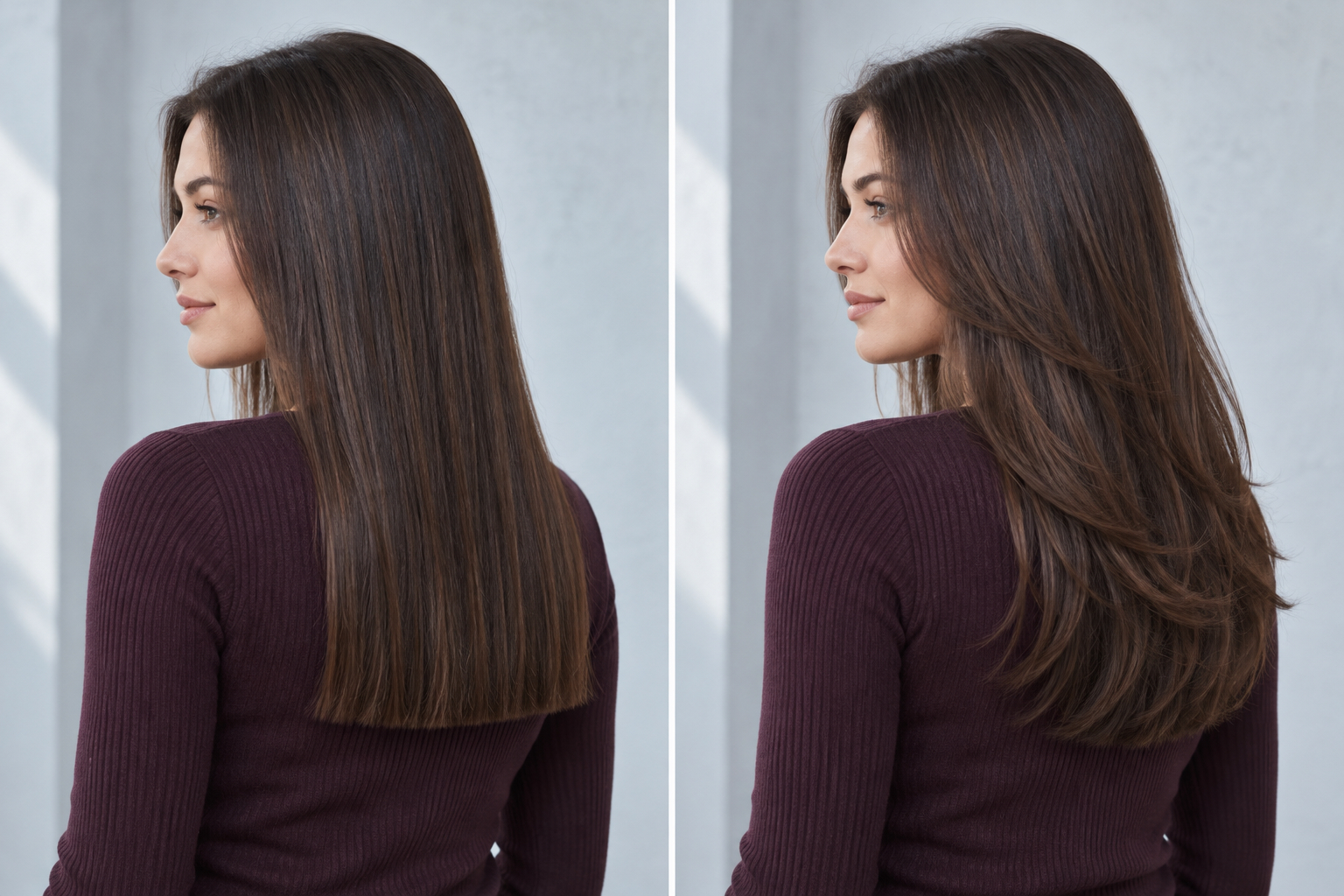
The Mechanics of Layering: What Actually Happens When Hair is Layered
In a layered haircut, shorter upper or interior sections sit over longer ones. Their ends land at different heights, so the hair can separate and move instead of gathering in a single solid line. The perimeter is the lowest visible edge of the cut; the weight line is where the shape looks most concentrated. Layers shift where that visual weight sits. They do not add strands or change your natural density.
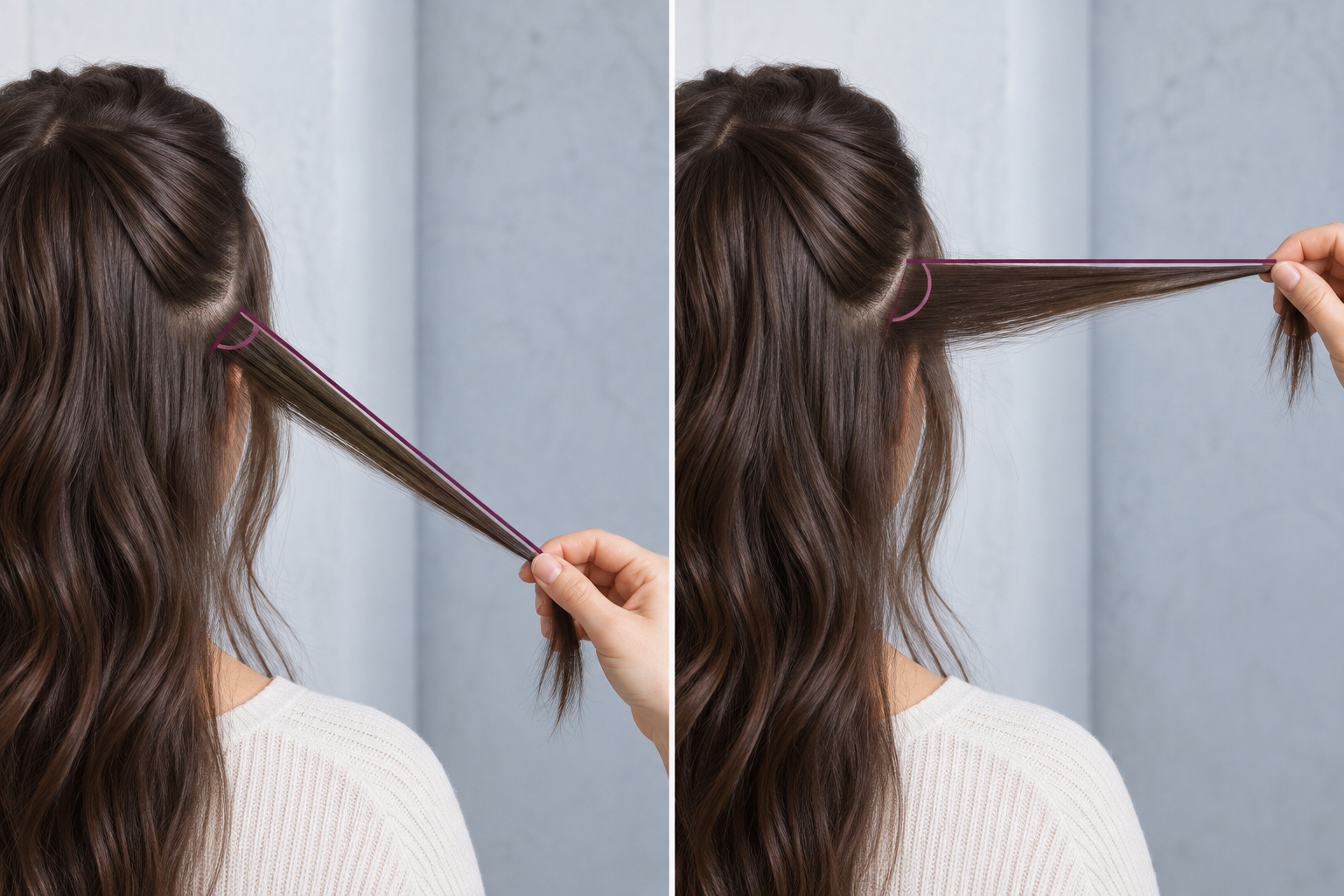
Elevation is the angle at which a stylist holds a section away from the head. A lower lift, such as roughly 45 degrees in a particular section, can build graduation and retain more visible weight near the edge. A section projected closer to 90 degrees can create a stronger difference between upper and lower lengths. Those angles alone do not prescribe a finished haircut: the section’s location, cutting line, and over-direction—bringing hair toward a guide away from where it naturally falls—also change the result. Sam Villa’s soft-layer tutorial shows how changing elevation changes the length variation within one technique.
Ask your stylist to show where the shortest layer will fall when your hair is dry, then look at the lower edge from the front and back. That tells you more than asking for a number of layers.
Layers vs. One-Length Hair: Direct Comparison
Both cuts can keep the same overall length. The choice is where you want the hair’s weight and movement to show.
| What to compare | One-length cut | Layered cut |
|---|---|---|
| Lower edge | A clear, substantial line with most ends meeting near one level | A softer outline; the edge may look lighter if many pieces end above it |
| Shape and movement | A compact silhouette that moves more as a single shape | More separation and movement through the sides or crown |
| Styling | The edge can read clearly with simple drying | Individual sections may need brushing, diffusing, or product to show their intended direction |
| Good reason to consider it | You want maximum visible fullness at the ends, often useful with straight, lower-density hair | You want to release bulk or add shape around the face, often useful with dense, wavy, or curly hair |
A one-length cut is not automatically flat, and layers are not automatically fuller. The finished effect depends on density, strand thickness, natural texture, and styling. If your ends already look sparse, compare a small amount of layering with a stronger perimeter before asking for a dramatic change. The fine-hair haircut guide shows that trade-off in more detail. Sam Villa demonstrates layers that preserve the perimeter rather than treating layers as an all-or-nothing choice.
The 3 Core Types of Modern Layers
1. Long Seamless Layers
Long seamless layers begin lower in the cut and blend gradually into the longest pieces. There should be no obvious shelf between the upper lengths and the perimeter. They can loosen a heavy outline while leaving enough length to tie back. Ask to see the transition from the shortest back layer to the bottom edge, especially if you want the ends to remain substantial.
2. Face-Framing Layers
Face-framing layers put shorter pieces near the front, often starting around the chin or collarbone and joining the longer sides. Their landing point changes the contour around your cheeks and jaw. A cheekbone-length starting point gives a different effect from a collarbone-length one, and a curl may spring higher when dry. Our face-shape guide helps you compare where the framing draws the eye. If you also want a fringe, discuss how it will blend into those pieces rather than assuming a slide cut is required.
3. Shag & Wolf Cut Layers
A shag or wolf cut uses more visible contrast: shorter crown sections create an airy top while longer pieces remain below. That separated outline can be appealing if you want texture and an intentionally undone shape. It is a bigger departure from a one-length cut than long seamless layers. Decide how much crown height you want, how light the ends may become, and whether you enjoy styling those shorter pieces before choosing it.
How to Layer Different Hair Textures Without Regret
Fine or low-density hair: Start conservatively. Light surface layers or a few face-framing pieces can create movement while leaving the lower edge strong. Fine describes strand diameter; density describes how many strands grow in an area, so fine hair can still be abundant. Sam Villa’s fine-hair technique uses sectioning and over-direction to protect the perimeter. Compare the ends after the hair is released, especially around the ears. See the fine-hair guide for perimeter choices.
Dense hair: Ask where the bulk actually bothers you. Interior layers can remove weight beneath the surface at the back without turning every outside section into a short tier. Sam Villa demonstrates internal weight removal in thick hair. If you still want a strong outline, show the stylist the amount of visible edge you want to keep.
Curly hair: Plan the shape on dry curls. Rounded layers can move fullness upward and let curl groups sit at different levels, but too-short top pieces can create an abrupt shelf. Compare the proposed shortest layer and perimeter after the curls settle in their usual pattern. The curly-hair guide explains dry length, shrinkage, and rounded silhouettes.
Whatever your texture, bring a reference that shows the back as well as the front. Point to the layer you like, the edge you want to preserve, and the amount of styling you normally do. A photograph illustrates a direction; your density and growth pattern determine how the cut settles on you.
Frequently Asked Questions
Do layers make hair look thinner or thicker?
They can do either visually. Removing too many strands from a low-density perimeter can make the ends look thinner. On dense hair, placing shorter pieces above the edge may release bulk and make the shape look airier or fuller around the crown. Layers do not change the number of hairs you have.
How do I explain the kind of layers I want to a stylist?
Name the first place you want a shorter piece to land—at the cheekbone, chin, or collarbone—and the longest edge you want to keep. Say whether you want an invisible blend or visible separation, and show front and back references. Ask the stylist to check those landmarks on your dry texture. Use the salon consultation guide to turn those choices into a short brief.
Do layered haircuts take longer to style?
Sometimes. If you want a polished outward sweep or lifted crown, you may need to direct sections with a brush or diffuser after washing. Soft layers can also air-dry well if they suit your natural texture. Ask how the cut will look on a day when you do your usual routine. If you use heat to shape the layers, the American Academy of Dermatology recommends limiting excessive heat.