The haircut library · Decision guide
Haircuts for Fine Hair: Perimeter, Layers and Styling
Compare the bottom edge first, then decide how much movement you want through the top.
What haircut helps fine hair look fuller? Start with a clear, substantial perimeter: the line formed by the ends of the cut. A blunt bob is one option, but a longer cut can keep that visual weight too. Add only the layers that give you the movement you want without leaving the ends looking sparse. The best balance depends on how much hair you have and how you style it.
Fine vs. Thin Hair: The Crucial Difference in Hair Architecture
Fine describes the diameter of an individual hair strand. Thin describes how much hair grows across the scalp, often called density. You can have many fine strands, or fewer coarse ones. Looking at both traits helps you explain your goal to a stylist: do you want a fuller-looking edge, more lift at the roots, or less visible scalp? The guide to haircuts for thin hair focuses on density; this guide focuses on how a cut shapes fine strands.
Fine hair is not necessarily damaged or weak. Its small strand diameter simply changes how a cut’s lower edge and layers may look. Check your hair when it is dry and worn as usual. Do the ends form a clear line, or do they separate into wispy pieces? Does the crown lie flat, or is it the sides that feel heavy? These observations are more useful than a label alone.
Top Haircut Silhouettes Engineered for Fine Strands
The Blunt Bob (Chin to Collarbone)
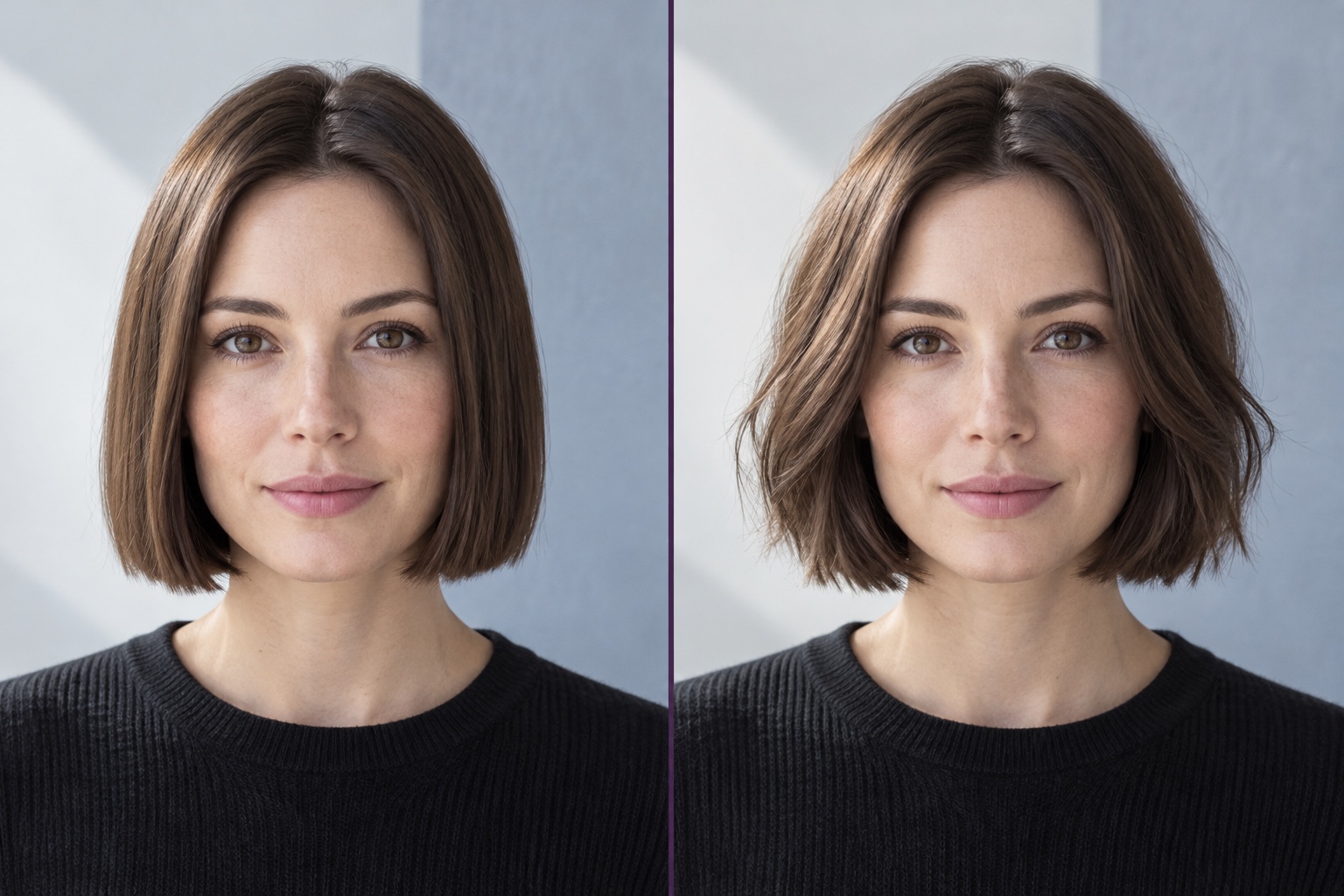
A blunt bob places many ends near one length, creating a distinct lower line. That line can make the perimeter look fuller even though it does not change strand diameter or the number of hairs. Try comparing a chin-length edge with one that lands just below the jaw or near the collarbone. The landing point changes the silhouette and how the cut sits against your neck and shoulders. The bob haircut comparison goes deeper on those length choices.
If your hair bends or waves, ask to judge the line once it is dry. A perfectly straight salon blowout can conceal the way a blunt edge behaves on a normal day.
Textured Pixie with Structured Weight
A pixie can put short, movable pieces through the top while keeping enough length in the fringe or crown to shape. It may be easier to create visible root lift when the top is shorter, but the result still depends on growth patterns, texture, product, and drying. Ask where the cut should stay solid: a wispy fringe and heavily thinned sides can make the whole silhouette look less defined than you intended.
Short does not automatically mean little work. A pixie that relies on daily lift or a precise outline may take more styling and more frequent salon visits than a longer cut that falls into place on its own.
The Collarbone Cut with Subtle Surface Layers
If you want to keep length, start with a collarbone-level perimeter and compare a small amount of movement on the surface or around the face. The shortest pieces should support the shape you want without stripping too much hair from the bottom line. If the ends already look sparse, ask to preserve the edge before adding more layers. The layers guide explains how the starting point and amount of layering alter the outline.
The Cutting Technique: What to Tell Your Stylist
Use the perimeter as a visual checkpoint. In the comparison below, the left side has a compact lower line. The right side shows how many shorter pieces can make the ends appear lighter. It illustrates a design trade-off, not a rule that every layered cut will look sparse.
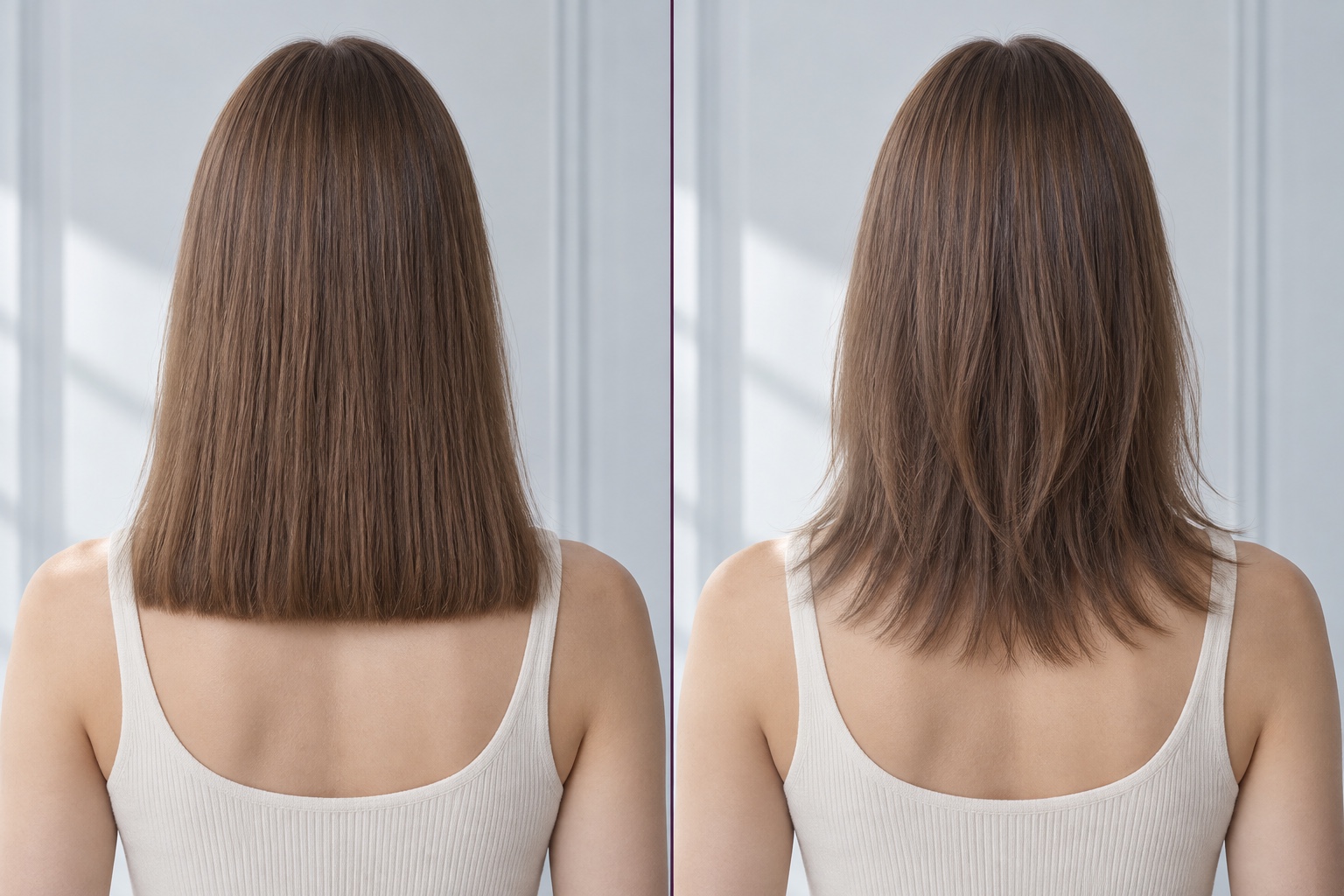
Bring a reference that shows both the front and the ends. You could say: “I want the bottom edge to look full. Can we keep a clear perimeter and add only enough layering for movement?” Ask the stylist to show you where the shortest layer would fall on your dry hair. If you want a softer edge, say so; blunt cutting, point cutting, and texturizing tools can all be used with different amounts of weight removal. The outcome matters more than a blanket ban on a tool.
If your current ends feel too light, discuss whether a shorter, stronger line would meet your length preference before adding more texture. Take this question and your reference images to a haircut consultation.
Styling Fine Hair for All-Day Hold
Build lift with the smallest routine you can repeat. On damp hair, try a modest amount of lightweight mousse or another root-focused styling product, then direct airflow at the roots while lifting sections with your fingers or a brush. Let the shape cool before brushing it out. Product amount and hold vary by hair and formula, so start sparingly and adjust; a heavy coating can make some fine hair fall flat.
Keep conditioning where your hair needs it. The American Academy of Dermatology advises applying conditioner to the ends of fine or straight hair. You do not need to avoid every oil or silicone: compare how a particular product feels and looks on your hair. If you use a blow-dryer or hot tools, choose lower heat and limit repeated passes; the AAD explains how excess heat can damage hair.
Salt spray may add a rougher, separated finish, but it is optional and may not give the polished, substantial edge you want. Choose products for the silhouette you are trying to maintain rather than assuming that more texture always means more fullness.
Frequently Asked Questions
Should fine hair always be kept short?
No. A short cut can make root lift easier for some people, while a long cut can work if you like its shape and its lower edge still looks the way you want. As length increases, check whether your ends remain substantial and whether your everyday styling keeps the crown where you want it. There is no universal shoulder-blade cutoff.
Are curtain bangs okay for fine hair?
Yes, if you leave enough hair for the rest of the cut. A deep section taken far back from the hairline removes more strands from the sides; a lighter fringe may preserve a fuller perimeter. Compare both options on your own part and natural texture. The curtain-bangs guide covers length and styling.
How often should fine hair be trimmed?
There is no fixed interval for every fine-haired person. Book a trim when the line you chose starts losing its shape or the ends show wear, and set the timing with your stylist based on the cut, growth, and your use of heat. A trim removes worn ends; it does not change strand diameter. For gentler everyday care, the AAD recommends minimizing rough handling and excessive heat.