The haircut library · Decision guide
Curtain Bangs: Length, Styling and Upkeep
Choose the shortest piece you want to live with, then test how the fringe falls with your natural texture and part.
Are curtain bangs right for me? Curtain bangs are shorter near the center part and lengthen toward the sides, leaving an opening across the forehead. That diagonal frame can work with many face shapes because you can choose where the outer pieces end. The useful decision is whether you want cheekbone-length pieces that make a stronger statement or a jaw-length version that blends into the rest of your haircut. Check your hairline and daily styling routine before you cut.

What Makes Curtain Bangs Unique: The Architectural Softness
Curtain bangs, or curtain fringe, make a parted frame rather than a solid line across the forehead. The center is the shortest area, often falling around the bridge or tip of the nose when pulled straight, while the sides angle toward the cheekbones or jaw. The exact dry stopping point depends on your texture, growth pattern, and how much bend you style into the fringe. Sam Villa’s curtain-bang tutorial describes the center part and gradual lengthening at the sides.
A straight-across fringe puts more visual weight in one horizontal line. Curtain bangs open the center and draw two softer diagonal lines beside the face. Neither shape is universally more flattering. If you like an open forehead and want face-framing movement, describe the shortest center piece, outer stopping point, and amount of density to your stylist. Those details are more useful than the trend name alone.
Choosing the Right Starting Length for Your Face
Decide where you want the outer pieces to land when your hair is dry. Bring a front-view reference and show the point on your own face. Cheekbones and jaw are landmarks for the haircut, not rules about which face shapes may wear it.
Cheekbone-Grazing Length (The Sweet Spot)
Outer pieces near the cheekbones bring the frame close to the eyes and upper cheeks. This is the more visible curtain shape, especially when the ends sweep away from the face. On a rounder outline, the diagonal can interrupt a strong horizontal emphasis; on an oval outline, it can add a specific focal point. Choose that effect because you like it, not because either face needs correcting. Our round-face hairstyle guide compares how length and side volume change the outline.
Check whether the shortest pieces will fall into your eyes when you skip styling. A cheekbone-length piece may tuck behind an ear on some heads but slip forward on others, depending on hairline, ear position, and how much hair was included in the fringe. Test this with your stylist before cutting.
Jawline-Length Curtain Bangs
Outer pieces that reach the jaw make a quieter frame and can blend into longer front layers. This is a useful starting point if you want to see the shape before committing to a shorter center. With long hair, the diagonal can connect the fringe to the rest of the length; with a short bob, ask where it should meet the bob’s edge so it looks intentional. The layers guide compares how front pieces relate to layers through the rest of a cut.
At this length, a loose part may make the pieces look like face-framing layers rather than obvious bangs. If you want a visible curtain, tell the stylist how much shorter the center should be and where the sweep should begin. Ask to assess the shape dry, in the part you actually wear.
The 5-Minute Styling Blueprint: Brushing and Rollers
Five minutes is a useful trial routine for the fringe, not a guaranteed time for every hair type or a substitute for drying the rest of your hair. Start with the roots slightly damp so you can redirect their fall without repeatedly heating dry hair.
- Set the roots. Gently guide the fringe forward with a round brush beneath the hair. Aim the dryer down the strands and move it rather than holding heat in one spot. If the center splits before you want it to, pass the roots briefly across the forehead in both directions first.
- Open the curtain. Separate at your chosen part. Lift each side on the brush, then guide the ends back and outward from the face at roughly a 45-degree angle. Let the hair cool in that position before releasing it; adjust the angle to get a soft sweep instead of a stiff curl.
- Try a roller if you want more bend. Roll each side away from the face with a hook-and-loop roller while the hair cools for about five minutes, then remove it gently. Skip the roller if your natural bend already gives the shape you want.
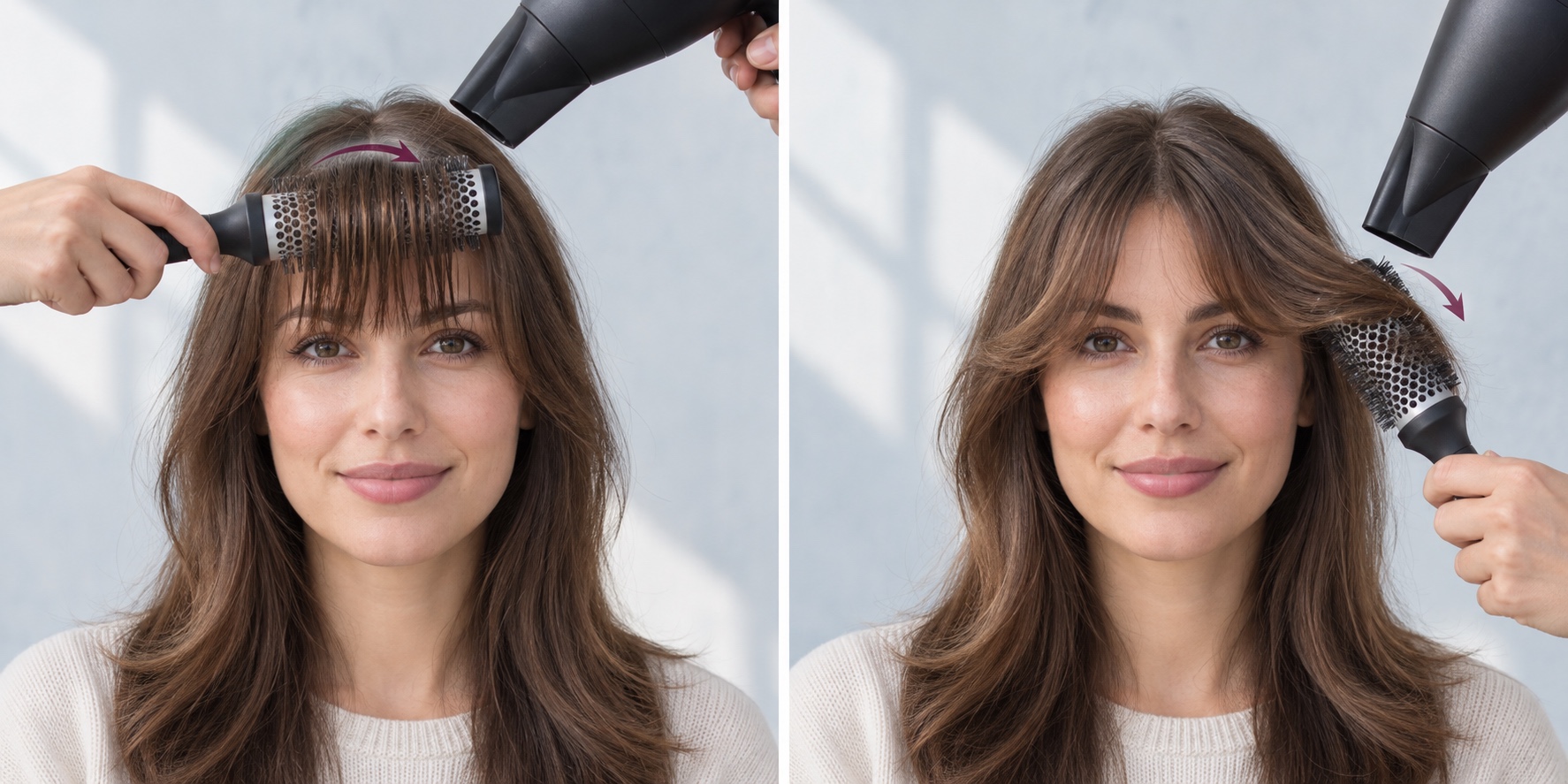
Use a comfortable low or medium heat setting and avoid pulling hard on damp hair. The American Academy of Dermatology’s hair-styling guidance notes that excessive heat can damage hair and advises limiting blow-drying. On days you do not wash, dampening just the fringe may be enough to reset it.
The Reality Check: Hair Textures and Forehead Cowlicks
On fine hair, a lighter fringe can move easily, but taking too much hair from the front may leave the sides sparse. Ask for a small section first and see how it sits dry. A little lightweight texture product may help separation, but it is optional; product cannot add actual strand density. Compare perimeter and layering choices in the fine-hair haircut guide.
On curly or strongly wavy hair, the fringe may spring up after drying. Choose the shortest dry point with your stylist and leave room for that shrinkage when the hair is wet. A round-brush finish is only one way to wear it; you can also keep the natural curl pattern and shape the sides accordingly. See the curly-hair haircut guide for the broader length decision.
A cowlick is a growth pattern near the hairline that makes a section push in a different direction. It can shift a center part or separate one side. Try cross-drying the damp roots: comb them left while directing the dryer downward, then right, and finally settle them into the part you want. Keep the nozzle moving and use gentle tension. Sam Villa’s cowlick blow-drying guide demonstrates working close to the roots and changing direction. The pattern itself does not disappear; if it is strong, ask the stylist to design the fringe around it.
Growing Out Curtain Bangs: Zero Awkward Phase
As the shortest pieces grow past their original landmark, a curtain fringe can blend into longer face-framing layers. That transition is often easier if the sides were cut with a gradual diagonal, but it is not automatic or unique to curtain bangs. The center may still fall into your eyes before it reaches a comfortable tuck-back length. During that stage, change the part, sweep the pieces to one side, or pin them back rather than assuming they will always sit neatly on their own.
Before the salon visit, ask: “Where will the shortest center piece and the outer edge land when my hair is dry, and how much front hair are you taking into the fringe?” Show a reference with a similar texture and explain whether you will use a brush, roller, or no heat on ordinary days.
Frequently Asked Questions
Do curtain bangs require daily styling?
Some do; some fall into a useful shape with a quick reset. If your roots separate or lie flat, plan to dampen and redirect just the fringe for a few minutes. A polished, lifted finish may take longer on dense hair or a strong cowlick. Try the routine before treating “low maintenance” as a promise.
Can you tuck curtain bangs behind your ears?
Usually once the outer pieces are long enough to reach and stay behind your ears, but cheekbone length alone does not guarantee it. Test the actual cut with your stylist; a clip or a different part can help while it grows.
Do curtain bangs look good with a ponytail or bun?
They can make a soft frame when the rest of the hair is up. Decide how much fringe you want loose and whether the shortest strands stay out of your eyes. Keep the ponytail or bun comfortable rather than pulling the hairline tight.