The haircut library · Decision guide
Hairstyles for Round Faces: Length, Volume and Framing
Compare where a cut ends, where its shortest layers begin, and where it holds its volume.
What hairstyles work for a round face? For a longer-looking outline, start with a collarbone-length lob, long layers that begin below the chin, or a textured pixie with lift at the crown. Long curtain bangs can create a diagonal frame while leaving the center of the forehead open. A blunt edge or the most volume right at the cheeks will emphasize width there, so choose those details deliberately.
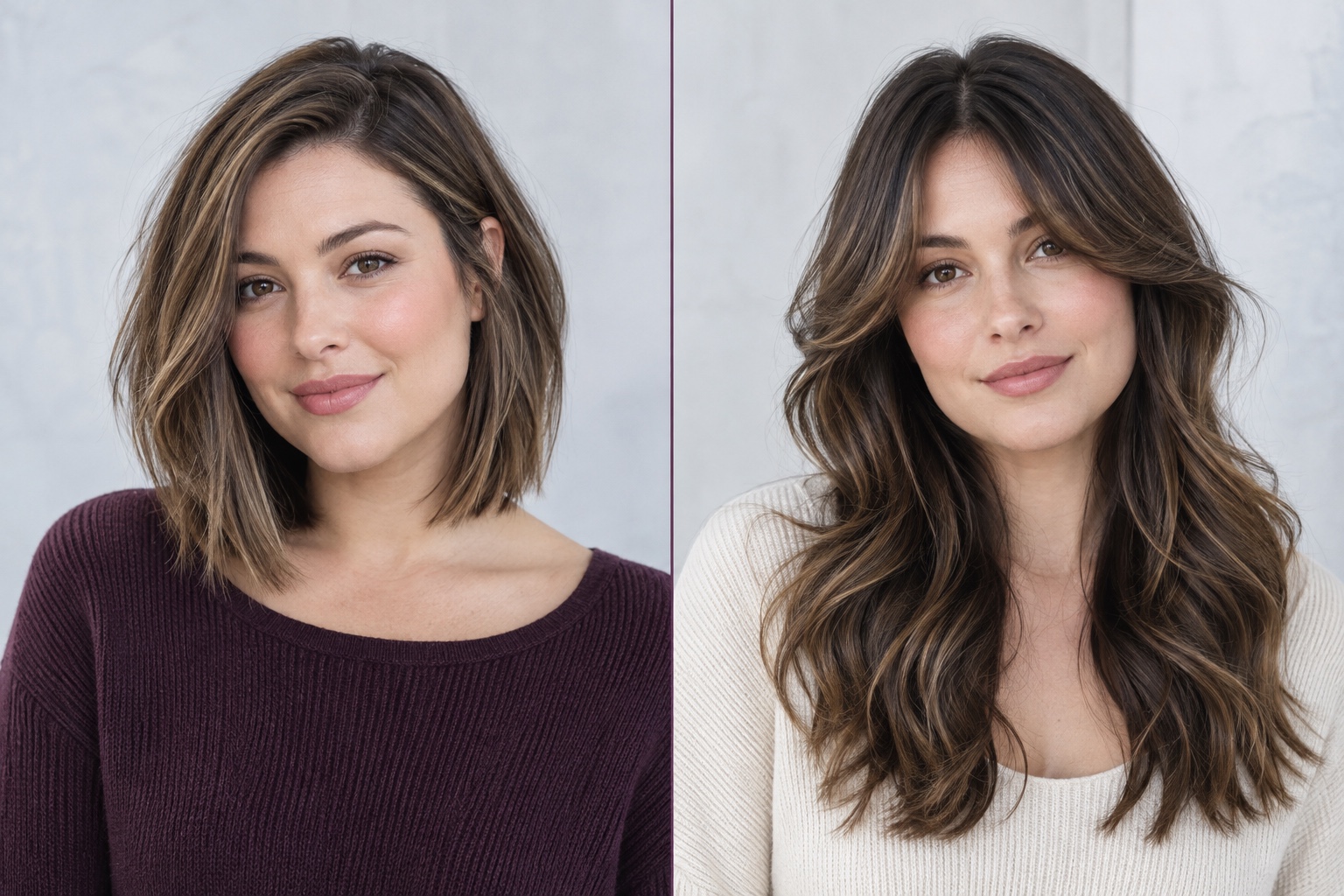
The Geometry of a Round Face: Creating Vertical Balance
A round face often looks close to as wide across the cheeks as it is long, with a softly curved jaw. That is a description of proportions, not a problem to correct. Your face may also combine round features with a longer forehead or a more defined jaw; the details you see matter more than a strict label.
If you want the overall outline to look longer, look for lines that travel past the cheeks toward the neck and shoulders. A little height at the crown can add to that effect. A strong horizontal edge ending at the cheeks or chin brings attention to that level instead. Neither choice is off-limits; it depends on the shape you prefer. For a broader comparison, see how haircut silhouettes interact with face shape.
Best Haircuts for Round Faces: Length and Silhouette Comparison
The most useful comparison is where the perimeter ends and where fullness sits. Look at your reference from the front and the side, then picture the same shape with your own hair dried the way you normally wear it.
The Long Bob (Lob): Sleek Collarbone Length
A lob that ends below the jaw, around the collarbone, leaves a clear line from the cheek down to the shoulder. A slightly longer front or an off-center part can add a diagonal without requiring a dramatic asymmetrical cut. If you want a smooth finish, ask how much blow-drying your texture would need to hold it. A natural wave can make the same lob wider at the sides, so check the dry shape rather than judging the cut by a straightened photo. Compare the edge and length options in the bob haircut guide.
Long Flowing Layers Starting Below the Chin
Long layers add movement while keeping the overall length. For a more vertical frame, ask where the shortest face-framing piece will land on dry hair: below the chin is a useful starting point, and a first prominent layer near the collarbone keeps more fullness away from the cheeks. Layers that start at cheekbone level create a different, wider emphasis. Neither placement is universally right; the difference is visible in the guide below. The layers guide explains how the starting point and perimeter work together.
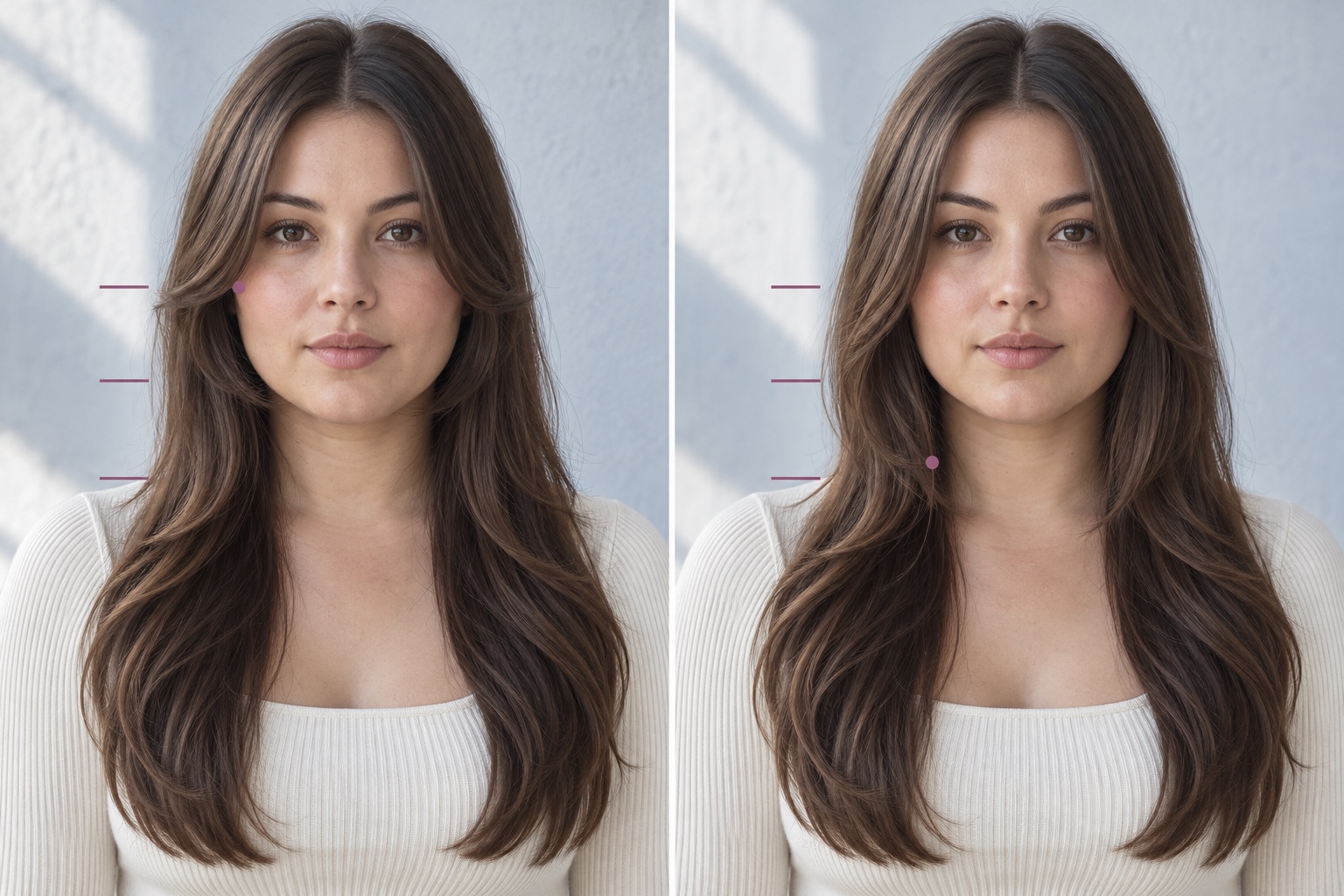
If your hair curls or springs up as it dries, a wet chin-length guide can finish above the chin. Ask your stylist to show the intended dry landing point before cutting. If your ends are fine or your density is low, fewer, longer layers may preserve a stronger-looking perimeter than heavy layering.
Textured Pixie with Crown Height
Short hair can create the same vertical balance. A pixie with a textured top and closer sides keeps the widest part of the cut above the cheeks. The practical trade-off is styling: the top may need product or a quick reset to keep its lift, while a very short perimeter can change shape noticeably as it grows. Ask to see the cut from the side and discuss how your growth pattern affects the crown.
Bangs for Round Faces: What Works and What to Avoid
A dense, straight-across fringe covers more forehead and adds a horizontal line. If you want to keep the face looking open and a little longer, compare a softer option first. Curtain bangs part near the center and angle outward; longer ends can meet the cheekbones or continue toward the jaw. Side-swept bangs make a diagonal line across the forehead. Both can frame the face without closing off the whole upper third.
Look at how bangs fall without a fresh blowout. A cowlick, natural wave, or curl can move the opening or shorten the visible length. Ask how you would dry or reset them on a typical morning. The curtain-bangs guide goes into length and daily styling choices.
Common Haircut Mistakes for Round Faces
These are mismatches if your goal is a longer-looking outline, not universal haircut rules:
- Stopping a blunt bob at the chin without checking its width. A firm line there can place the visual focus at the widest part of the face. Try the same bob a little below the jaw or closer to the collarbone before ruling it out.
- Copying a flat center part from a styled photo. A center part can work well, but perfectly flat sides with no movement may make the cut’s width more noticeable. A soft bend, longer framing pieces, or some lift at the roots changes the effect.
- Building all the volume beside the ears and cheeks. If that is not the silhouette you want, move some lift toward the crown or let the fullest layers fall lower. Natural texture and density determine how easily that shape holds.
Bring a front and side reference to your appointment. Point to the desired dry length, the shortest framing piece, and the place you want the hair to look fullest. A reference helps communicate the direction; the finished shape still depends on your own texture, density, and styling. If frequent heat styling is part of the look, the American Academy of Dermatology advises limiting heat and using low or medium settings.
Frequently Asked Questions
Can women with round faces pull off short hair?
Yes. A pixie with texture at the crown and a closer fit at the sides is one way to create a taller outline. A cropped bob can also work if you like the width it creates. Choose the short shape you enjoy and ask how it will sit with your natural texture and growth pattern.
Is a middle part bad for a round face?
No. A middle part changes the symmetry of the frame; it does not decide the whole silhouette. Open-center curtain bangs, long pieces that fall below the chin, or movement through the lengths can keep the result soft and balanced. Compare the part on your own dry hair before deciding.
What haircut makes a round face look thinner?
If you mean a narrower-looking hair outline, try a collarbone-length lob with a slightly longer front or light asymmetry, keeping the sides from becoming widest at the cheeks. Long layers that start below the chin offer another option. These are visual styling effects, not changes to your face; your preferred look and routine should decide the cut.