The haircut library · Decision guide
Bob Haircuts: Comparing Length, Perimeter and Layers
Compare where the edge lands, how much weight it keeps, and what you will do to style it.
Which bob haircut should I choose? Start with the dry length of the lower edge. A chin-length bob draws attention to the jaw and cheeks; a collarbone-length lob gives you a longer line through the neck and shoulders. A blunt edge can make fine or less dense hair look more substantial, while carefully placed layers or internal weight removal can soften a dense bob. Choose the silhouette you like, then check how it behaves with your natural texture and routine.
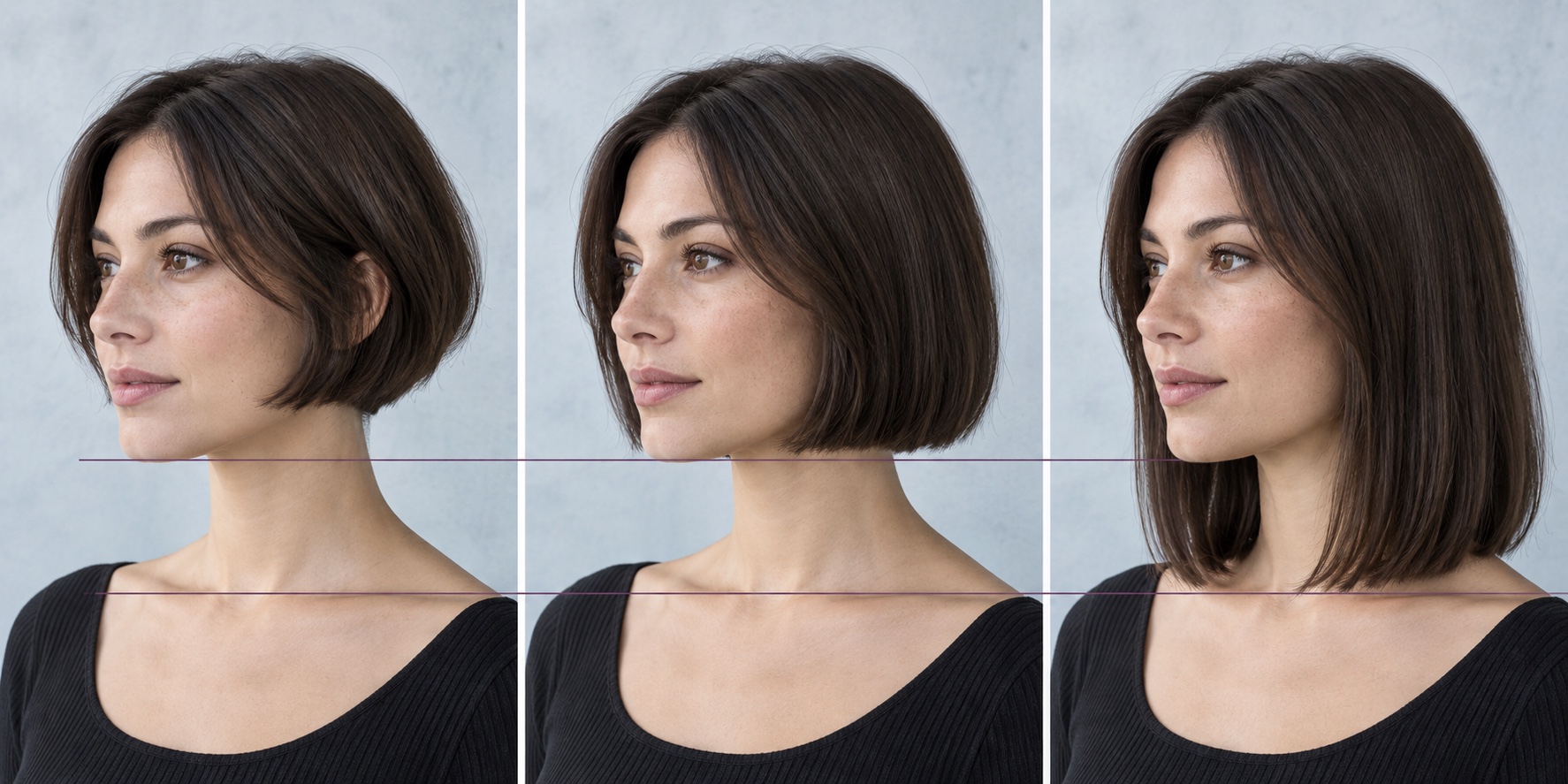
The Anatomy of a Bob: Why Geometry Dictates the Result
A bob is defined less by one exact length than by its visible lower edge, or perimeter. That line tells the eye where the shape ends. A compact edge at the jaw can emphasize the jawline; moving the edge below the jaw changes the frame around the face and neck. The weight line is the area where the cut appears fullest. On a mostly one-length bob, it often sits close to the perimeter. The line is a visual effect of the cut, not a change in how much hair grows from your scalp.
The edge can run level from back to front, angle slightly longer toward the face, or curve around the head. A forward angle creates a more diagonal side view; a level line reads as more graphic. Graduation means shorter lengths support longer ones, often at the back, to build or adjust shape. It can help control bulk, but the amount matters: a heavily graduated nape looks and grows out differently from a bob with a solid lower edge. Bring front, side, and back references so the word bob does not have to carry all these decisions.
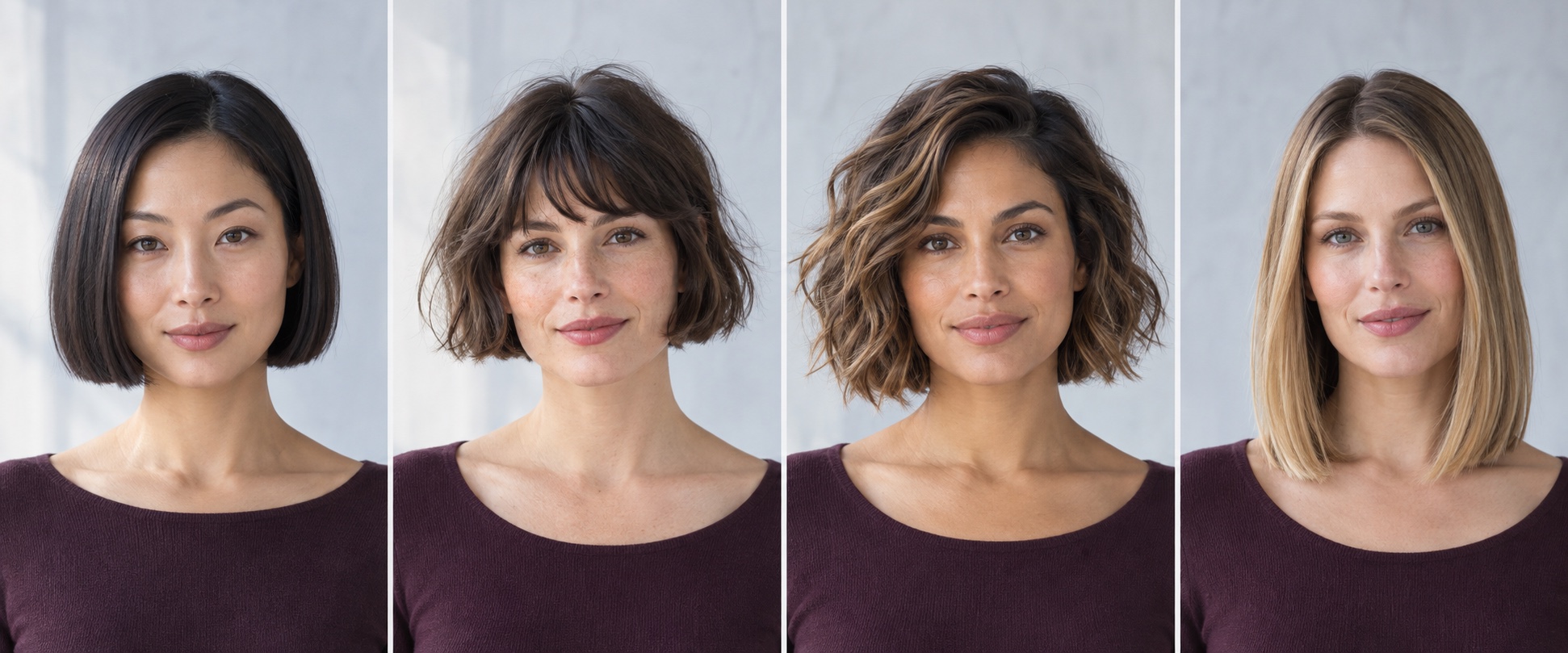
The 4 Classic Bob Variations Compared
1. The Classic Blunt Bob (Jawline Length)
A classic blunt bob keeps most ends at one clear level, usually around the jaw or chin. It creates a crisp outline and shows exactly where the perimeter meets the face. On straight or gently bending fine hair, that concentrated edge can look fuller than ends divided among many short layers. It does not thicken individual strands. The fine-hair haircut guide explains that distinction and how much layering you might keep.
Ask to see the cut at its natural dry position. If your hair flips outward at the jaw or tucks behind your ears, the same measured length can make a different everyday shape from the reference photo. A sharp line may also need regular smoothing if you want it to look graphic every morning.
2. The French Bob (Mouth to Cheekbone Length with Fringe)
The French bob is a short, face-framing direction: the edge often sits around the mouth or upper jaw, with a soft fringe or shorter pieces near the eyes. Its compact perimeter can bring attention to the cheek area. It need not be perfectly straight or paired with one mandatory bang style. A wispy fringe gives a different feel from a heavier, straight-across fringe; curtain pieces open the forehead and add a longer diagonal.
Because the cut sits above or close to the jaw, check where your hair springs to when dry. Wavy hair may make the edge look shorter and wider than it does when stretched. Ask whether the fringe will need a morning reset and whether you are comfortable with the shortest face-framing point.
3. The Textured Layered Bob
A layered bob uses some shorter lengths to interrupt a solid block of hair and encourage movement. On wavy hair, that can let bends separate instead of accumulating at the bottom. On dense hair, a stylist might remove weight inside the cut while preserving enough perimeter to keep it recognizable as a bob. Neither step has to produce wispy ends.
Describe where you want movement: at the crown, through the sides, or only near the lower edge. If your ends already look light, ask to keep a firmer baseline and use fewer or longer layers. For a closer comparison of layer placement, see the layers guide.
4. The Long Bob (Lob / Collarbone Cut)
A lob moves the edge below the jaw, often toward the collarbone. It is a useful first comparison if you want to try a bob shape without committing to a short jaw-level cut. The longer side sections create a more vertical frame, while the ends may bend where they touch the shoulders. Check whether you want that bend, a length just above it, or enough length to pull your hair back.
For a rounder face outline, the edge below the jaw can shift attention down from the cheeks, but that is an option rather than a rule about what looks good. Side width, parting, and texture also affect the result. Compare those choices in the round-face haircut guide. A lob can frame an angular jaw differently too; choose the line you prefer instead of treating face shape as a restriction.
Matching a Bob to Your Hair Density and Texture
Fine strands and low density are different traits. Fine describes strand diameter; density describes how much hair is present. With either, a mostly blunt perimeter may make the edge look more substantial because more ends meet at a similar point. If the back feels flat, a small amount of internal shaping may help without sacrificing the bottom line. The thin-hair guide looks at the density side of that choice.
Dense or coarse hair may form a wide, rigid outline if every strand is left to the same length. Ask a stylist whether subtle graduation at the nape, selective internal weight removal, or point cutting at the ends would soften the shape you see from the side. These are different techniques and can remove different amounts of weight. Rather than requesting “thin it all out,” point to the bulky area and the perimeter you still want to keep.
For waves and curls, choose the dry stopping point. Natural bends can shorten the visible length, and curl groups may settle unevenly across the head. A layered wavy bob can show movement without extensive daily smoothing; a curly bob may need its outline checked after drying. The curly-hair haircut guide covers shrinkage and rounded shapes in more detail.
Daily Styling Reality: Can You Really Wash and Go?
A loose, textured French bob may air-dry well if your natural bend already falls close to the intended outline. You might scrunch in a small amount of texture product or salt spray, then adjust the fringe with your fingers. Salt spray is optional: it can make some hair feel rough or overly separated. Ask your stylist to show the cut after your usual drying method, not only after a polished salon finish.
A sleek blunt bob asks a different question: how much work does your hair need to keep that edge smooth? Some people can part, dry, and leave it; others need a round brush or occasional flat-iron pass. Ten minutes may be a useful trial budget, but it is not a minimum for everyone. If you heat-style, the American Academy of Dermatology advises limiting heat and using lower settings. Compare the actual wash-day and next-day tasks in our low-maintenance haircut guide.
Before the appointment, describe the length in dry landmarks—mouth, jaw, chin, below jaw, or collarbone—and show the stylist where the front and back should end. Then ask: “How will this perimeter and the shortest layer sit when I style my hair the way I normally do?” That question is more useful than asking for a trend name alone.
Frequently Asked Questions
Will a bob make my face look rounder?
A firm edge at cheek or chin level can add a horizontal emphasis near that part of the face; a lob below the jaw creates a longer visual line. Neither effect is inherently better. Compare the dry side width, part, and front length against the outline you want. If you like a rounded, compact bob, you do not need to avoid it because of a face-shape label.
How often does a bob haircut need to be trimmed?
A precise, short perimeter shows growth sooner than a softer, longer outline. Four to six weeks can be a planning interval for someone who wants to preserve a very graphic line, but it is not a universal requirement. Book when the edge no longer lands where you want, the fringe obstructs your view, or the shape becomes hard to style; agree on timing with your stylist.
Can I wear a bob if I have wavy or curly hair?
Yes. A bob can be cut to suit waves or curls, from a compact shape to a rounder layered outline. Agree on the dry length, where the sides should have volume, and how much lower-edge weight to keep. Ask for a check after your hair dries in its usual pattern so the result is judged by the shape you will actually wear.