The haircut library · Decision guide
Haircuts for Curly Hair: Length, Shape and Shrinkage
Choose the shape you want your curls to make when they are dry, then plan the length and layers around it.
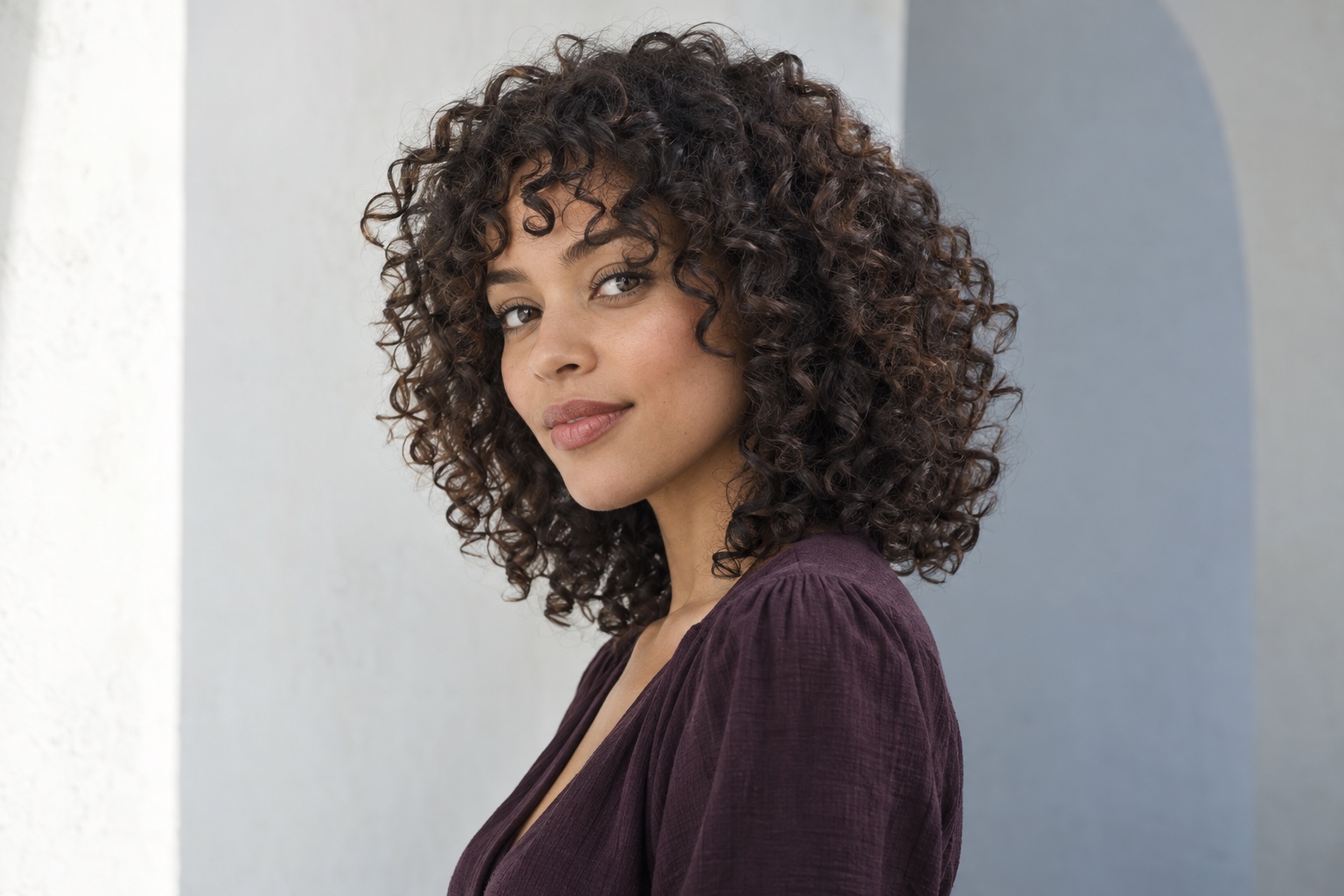
What haircut works for curly hair? Start with your natural, dry curl pattern. Curls can spring up as they dry, and different sections may settle at different lengths. A curl-aware cut checks the finished outline, places layers where you want volume, and leaves enough room for shrinkage—especially around the face. A rounded shag is one option, but a bob or long layers may fit your preferred shape and styling routine better.
The Physics of Curls: Why Wet Cutting Fails
A wet curl is stretched and weighed down by water. As it dries, it contracts into its familiar pattern, so a line that looks even while wet may sit differently afterward. The amount varies between people and even between the crown, temples and nape of one head. Choose your target length on dry hair, and point out the shortest piece you would be comfortable seeing after your usual styling routine.
Dry cutting lets a stylist see those individual curl groupings and the outline as they work. The DevaCut method is one example of a dry, curl-by-curl approach; Rëzo Academy describes its Rëzo cut as a dry technique designed around shape and volume. A method name alone does not determine the result. Ask how the stylist will check the cut after washing and drying, whether the initial cut is dry, wet or a combination.
How to Avoid the “Pyramid Effect” (Triangle Hair)
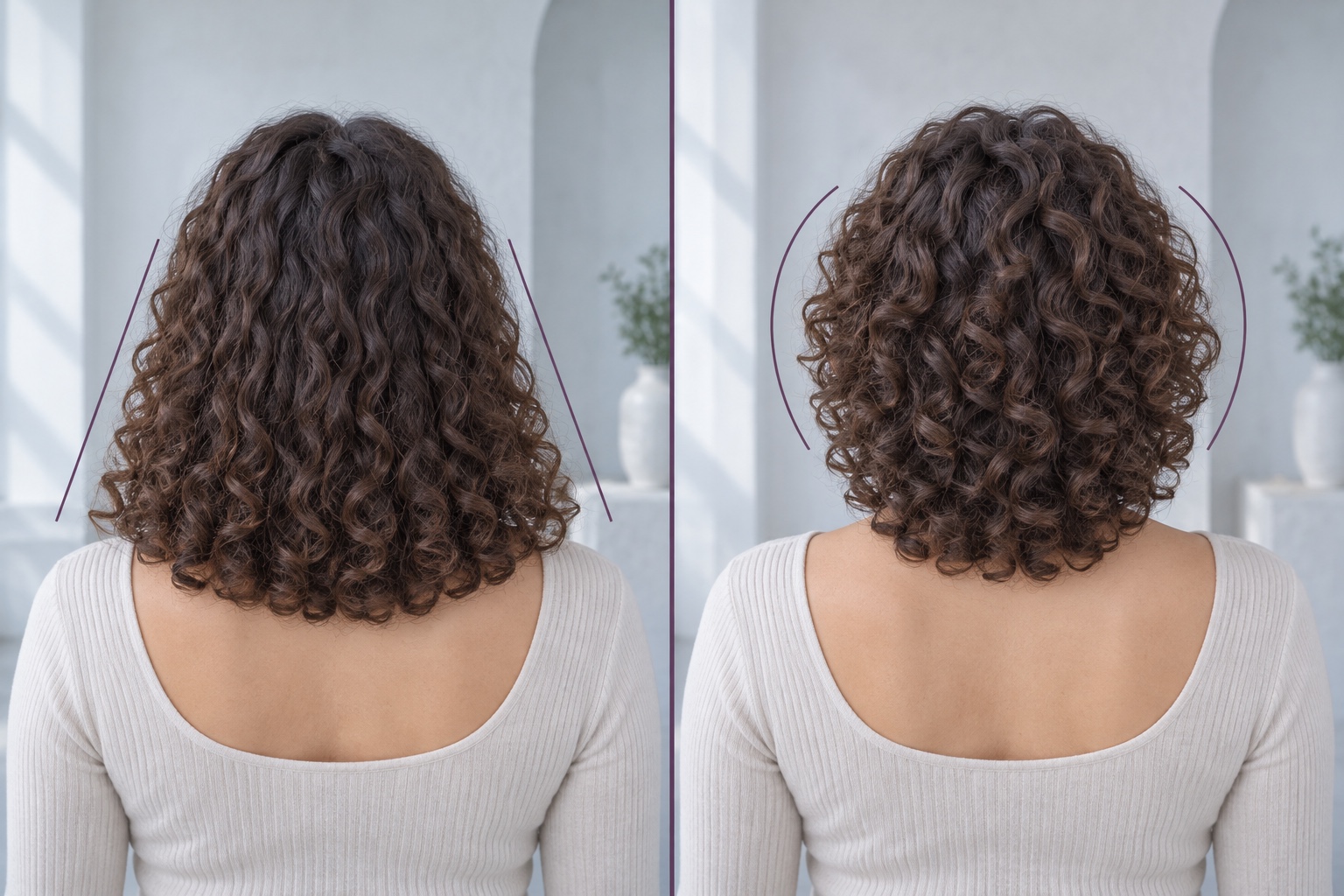
If most curls end near the same line, their volume can collect around the lower half while the crown sits closer to the head. That creates the triangular outline some people call pyramid hair. It is a shape choice, not a flaw: keep a one-length perimeter if you like its weight. If you want more fullness higher up, show your stylist where the silhouette should begin widening.
Rounded layers can move some visual weight from the bottom toward the upper sides and crown. The shorter pieces need to blend with the longer ones when dry; cutting them too short can create a disconnected shelf. Ask to see where the shortest layer will land and how much of the lower edge will remain. Our guide to layers explains how placement changes the outline.
Best Haircuts for Curly Textures by Length
Length changes where the perimeter meets your face, neck and shoulders. Decide where you want it to land after drying, then compare the amount of shape you want above that line.
Short Curly Bobs & French Crops
A short curly bob can place the outer edge around the jaw or upper neck, making the curl shape easy to see from the front and side. A French crop keeps the sides and back shorter and brings more attention to a textured top and fringe. Both reveal more of the neck and cheek area, but they ask for different styling: a bob needs the perimeter to fall where you want it, while a crop may need daily direction at the top. Leave enough dry length around the ears and hairline for your curls to move as intended. Compare bob silhouettes in our bob haircut guide.
Mid-Length Rounded Shag
A rounded shag keeps a longer lower edge near the shoulders while adding shorter layers higher up. That can make room for fullness at the crown and around the face without losing all the weight at the bottom. The exact balance depends on curl spring, density and how much separation you like. Ask your stylist to show you the dry position of the shortest upper layer and the longest curl near your collarbone.
Cascading Long Layers with Weight Removal
If you want to keep length, long layers can break up a heavy lower outline while preserving enough hair to tie back. Start with the areas that feel bulky or flat instead of asking for layers everywhere. More layering may make the ends look lighter, particularly if your hair is less dense. Check the back as well as the front before deciding how much weight to remove.
Can You Get Bangs with Curly Hair?
Yes. A soft curtain fringe can open around the eyes; a rounded curly fringe can sit across the forehead. Choose the dry landing point first. A bang cut to eyebrow length while stretched can rise above the brows when released, and neighboring curls may spring to different heights. Ask the stylist to work conservatively and adjust after the fringe has dried in its normal pattern rather than relying on a fixed allowance for every curl.
Think about how you usually wear your part, whether you want to refresh the fringe between washes, and whether you need it to tuck or pin back. The curtain-bangs guide compares face-framing lengths and upkeep.
Preparing for Your Curly Haircut Consultation
For a dry curl cut, ask the salon how it wants your hair prepared. Many curl specialists prefer clean, dry hair worn down in its usual pattern, without a ponytail, braid or heavy styling that changes the shape. If the appointment includes a wash or wet cut, the salon may give different instructions. Arrive with front, side and back references that show the dry shape, and say which parts of each image you want to keep.
Show where you want the longest curl to land, how much fullness you want at the crown and sides, and the shortest fringe or layer you would accept. Explain whether you air-dry, diffuse, stretch or sometimes straighten your hair; the finished cut should work for the ways you actually wear it. Use our salon consultation guide to turn those preferences into a short, concrete brief.
Frequently Asked Questions
How much do curls shrink when cut?
There is no reliable number based on a 2C, 3A or 3C label alone. Compare one of your own curls when gently stretched and when fully dry, then have the stylist check the proposed length in your usual pattern. The front, crown and nape may each behave differently.
Should a stylist use a razor on curly hair?
The tool is less important than the result you want. A razor can remove weight and create an airy edge; that may work for a deliberately soft shape but may be a poor fit if you want defined curl groups or a substantial perimeter. Ask what the razor would remove, where, and how the stylist will check the dry result. You can request shears if you prefer a clearer edge.
How often do curly haircuts need refreshing?
Rebook when your chosen shape changes: the fringe reaches your eyes, the upper layers lose their balance, or the lower edge feels too heavy. A precise crop may need reshaping sooner than long layers. Your growth rate, curl pattern and tolerance for a softer outline matter more than a universal calendar interval.