The haircut library · Decision guide
Haircuts for Thin Hair: Comparing Shape and Upkeep
Compare the weight at the ends, the coverage at your part, and the styling you can repeat.
What haircut makes thin hair look fuller? Start with a clear lower edge. A chin-length blunt bob or a collarbone cut can make the ends look more substantial than a longer cut with a sparse perimeter. A short pixie can work too if it keeps enough hair through the top for your preferred shape. Try a side part for lift, then choose the length and upkeep that fit your routine.
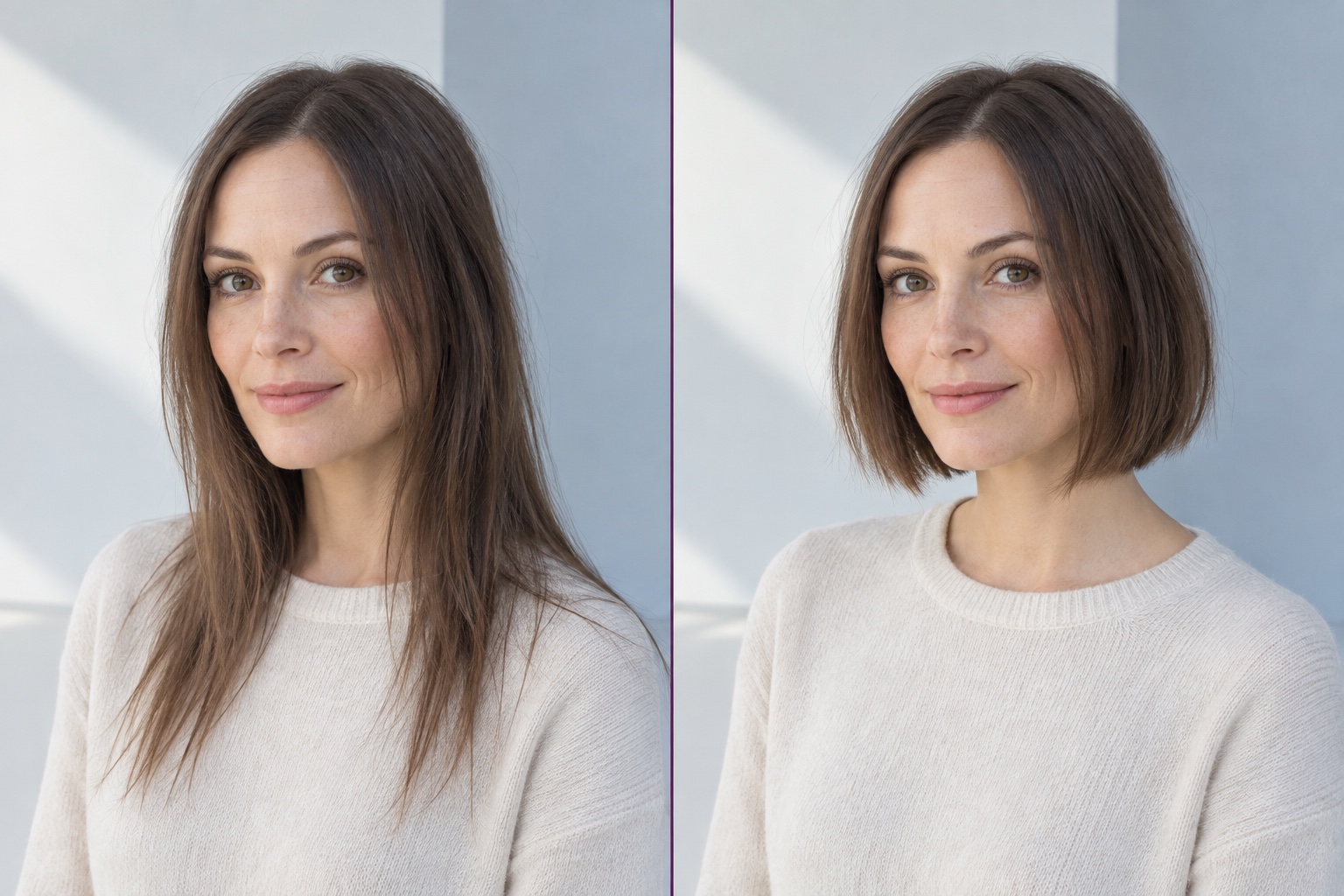
The Physics of Low Density: Why Length is the Enemy of Thin Hair
When fewer hairs reach the bottom of a long cut, the ends may separate and let the background show through. The weight of length can also pull a styled crown flatter. These are visual effects, not a rule that everyone with thin hair must cut it short. Look at your hair dry, from the front and back, and notice where the outline begins to look sparse. That point is more useful than a universal length limit.
Thin usually describes lower hair density: fewer hairs across an area of scalp. Fine describes a strand’s small diameter. You can have thin, coarse hair or dense, fine hair, and a cut may behave differently on each. Our fine-hair guide focuses on strand diameter and the balance between perimeter and layers. Here, the question is how to distribute the hair you have so the edge and part look the way you want.
Best Haircuts for Thin Hair That Maximize Fullness
The Sharp Blunt Bob
A blunt bob brings more ends to one clear line. If your current ends look wispy, moving that line to the chin or just below the jaw can make the perimeter appear more substantial. Ask your stylist to check the shape after your hair is dry, especially if it bends or waves. The exact landing point matters: a cut at the jaw and one near the collarbone frame the face and neck differently. Compare those options in our bob haircut guide.
The Textured Pixie with Side Sweep
A pixie removes length that may weigh down the top and leaves short pieces that can be directed toward one side. A side-swept fringe can soften a visible part and give you several ways to arrange the hair across the forehead. It cannot guarantee scalp coverage when hair moves, so check the cut in your normal part, under ordinary light, and from more than one angle. Keep enough length through the top to style without relying on aggressive thinning.
A pixie trades wash-and-dry time for a more deliberate shape. If you want lift and a precise fringe, expect some morning styling and discuss how soon the silhouette will need reshaping as it grows.
Shoulder-Skimming Lob with a Deep Side Part
If you want more length, a lob near the shoulders or collarbone can preserve a clearer lower edge while leaving enough hair to tuck back or tie loosely. Shifting your part moves more hair to one side and may create visible lift at the root. It does not double hair density or work equally well with every growth pattern. Try the new part at home for a few days before cutting around it, and see how it settles after a normal wash.
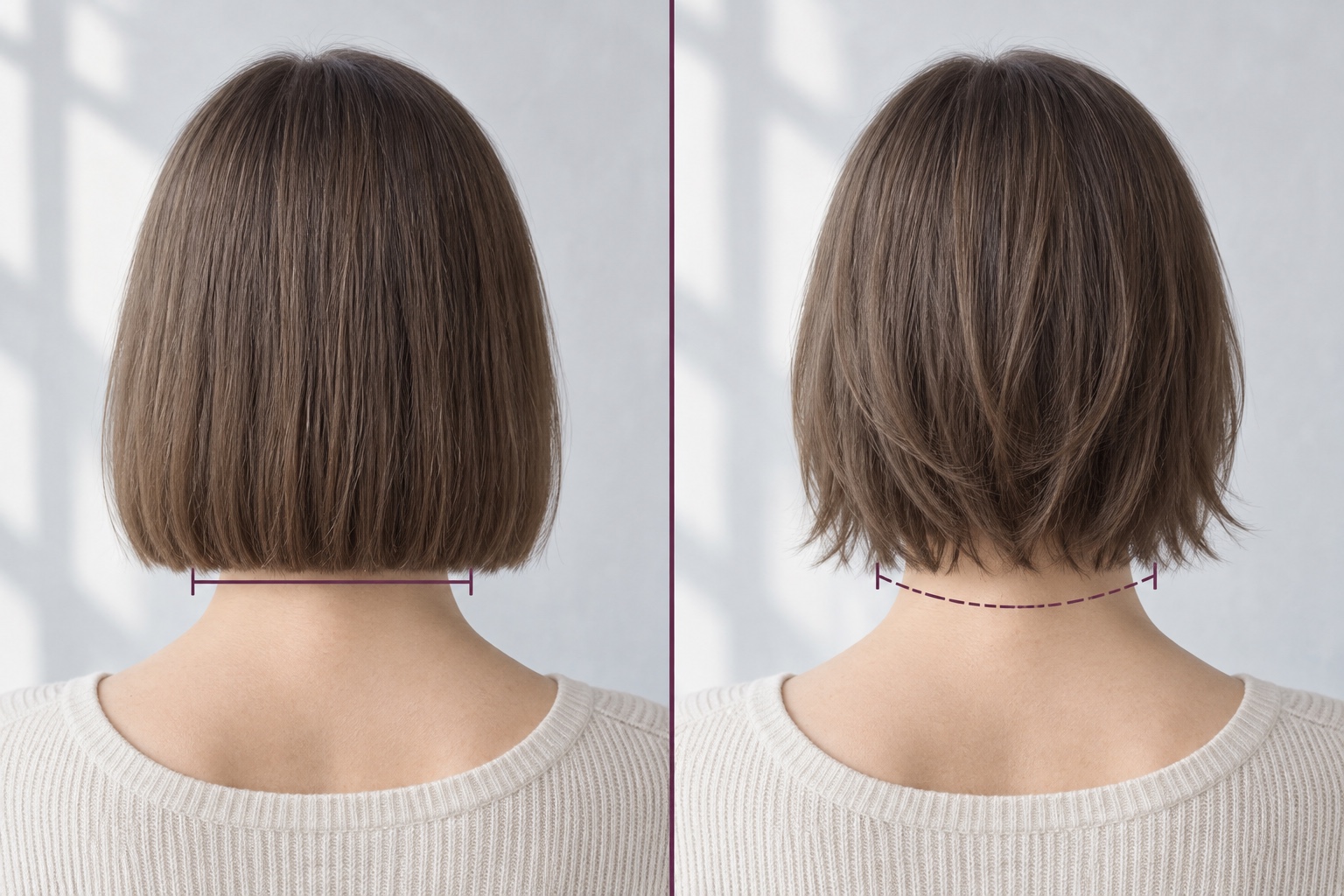
Techniques to Avoid at the Salon
If your priority is a substantial-looking edge, ask the stylist how much weight each technique will remove. Razor cutting and thinning shears can create a deliberately airy finish, but extensive use may leave an already sparse perimeter looking lighter. You can say, “Please keep the bottom edge clear and show me where any shorter pieces will land.” The tool itself is less important than the amount and placement of hair removed.
High, deep layers can reduce the number of ends at the bottom. If you want movement, ask whether a few surface or face-framing pieces would preserve the outline better than a full cascade. Our layers guide explains how layer placement changes the shape. Likewise, a thick fringe taken from far back on the crown uses hair that could otherwise contribute to the sides. Start with a lighter section if you want to test bangs while keeping the rest of the cut visually full.
Bring a front view and a back view of the cut you like, then describe how much time you will spend styling it. A haircut consultation guide can help you turn those references into specific questions.
Upkeep and Day-to-Day Styling for Thin Hair
For a simple root-lift routine, dry the roots in the direction opposite your usual part, let them cool, then settle the hair where you want it. A small amount of root powder can add grip; start lightly so the hair stays movable. Dry shampoo may also absorb oil and make hair look fuller between washes. The American Academy of Dermatology explains how to use dry shampoo and notes that it does not replace washing with regular shampoo and water. Stop or change products if your scalp becomes irritated.
Book a trim when the bob’s line starts losing its shape or the ends look worn. About six weeks may suit a precise short cut, but your growth rate, length, texture, and tolerance for a softer outline determine the schedule. Ask your stylist what change to watch for rather than treating a calendar date as a rule. If you use hot tools for lift, keep heat moderate: the AAD advises limiting heat to reduce damage.
If your density has changed noticeably or you are concerned about shedding, a haircut can change the appearance of the hair but cannot address its cause. The AAD describes when and how a dermatologist evaluates hair loss.
Frequently Asked Questions
Is a blunt cut always better than layers for thin hair?
No. A blunt perimeter is a useful starting point when your ends already look sparse, but a small amount of surface layering can give movement without sacrificing the lower line. Compare both on your dry hair and choose the shape you prefer.
Can I have long hair if I have thin hair?
Yes. Keep it if you like the shape and the ends still look substantial to you. If they become see-through, compare your current length with a collarbone-length reference. The shorter edge may read as fuller, but there is no fixed point or guaranteed increase in volume.
What bangs work best with thin hair?
Light, wispy bangs or a modest curtain fringe can leave more hair for the sides than a deep, heavy section. Check how the fringe sits with your natural part and how much styling it needs before committing to its width. A full straight fringe is still a choice if you prefer that look and accept the trade-off in the rest of the perimeter.