You can do a useful hair colour analysis at home with daylight, a mirror, a few ordinary fabrics, and a willingness to notice what does not quite work. The point is not to assign yourself a permanent label before breakfast. It is to separate the things people often lump together under what suits them: warmth, lightness, contrast, and the way a colour behaves next to an unmade-up face.
Set up a comparison that is honest enough to trust
Start near a window in daylight, preferably when direct sun is not cutting across the room. Face the window rather than standing with it behind you. Then remove the things that make colour judgment unnecessarily theatrical: strong lipstick, bronzer, tinted moisturiser, coloured contact lenses, and a bright top reflected under the chin. You do not have to look polished. In fact, the plain version of you is the one the test needs.
Look at warmth without letting tan or makeup run the show
Warmth is the yellow, golden, peach, copper, or olive tendency you see in the overall colouring. Coolness leans more rosy, blue-red, smoky, or grey-beige. Most faces are not dramatic examples of either. A person can have neutral skin with warm eyes, or cool-looking skin that still enjoys a little chestnut in the hair. That mixed reality is why a home test works better as a comparison than as a declaration.
Find two pieces of fabric: one muted gold, camel, cream, or warm olive; one soft silver-grey, cool taupe, dove blue, or charcoal. Hold each near the jaw in the same light. Do not ask which fabric you like more. Watch whether the under-eye area looks deeper, whether redness around the nose becomes louder, and whether the lips keep their natural colour. If both are tolerable, you may be neutral. That is not a failure to classify; it is useful flexibility.
Then use those clues for hair. If the warm fabric makes your face look rested, compare soft caramel, honey-beige, chestnut, and muted copper. If the cooler fabric calms the skin, compare ash brown, mushroom blonde, cool espresso, and neutral beige. Avoid starting with very bright orange or severe silver. Extreme shades make a poor first test because their intensity can distract from the actual warmth question.
Judge depth at the roots, not at the old dyed ends
Depth means how light or dark the hair reads. People often choose a new colour by hue alone, then wonder why a perfectly pleasant brown makes them look severe. The problem may be that it is too dark beside the brows, or too light beside the eyes. The root area is a sensible baseline because it shows the depth your features already accommodate without effort.
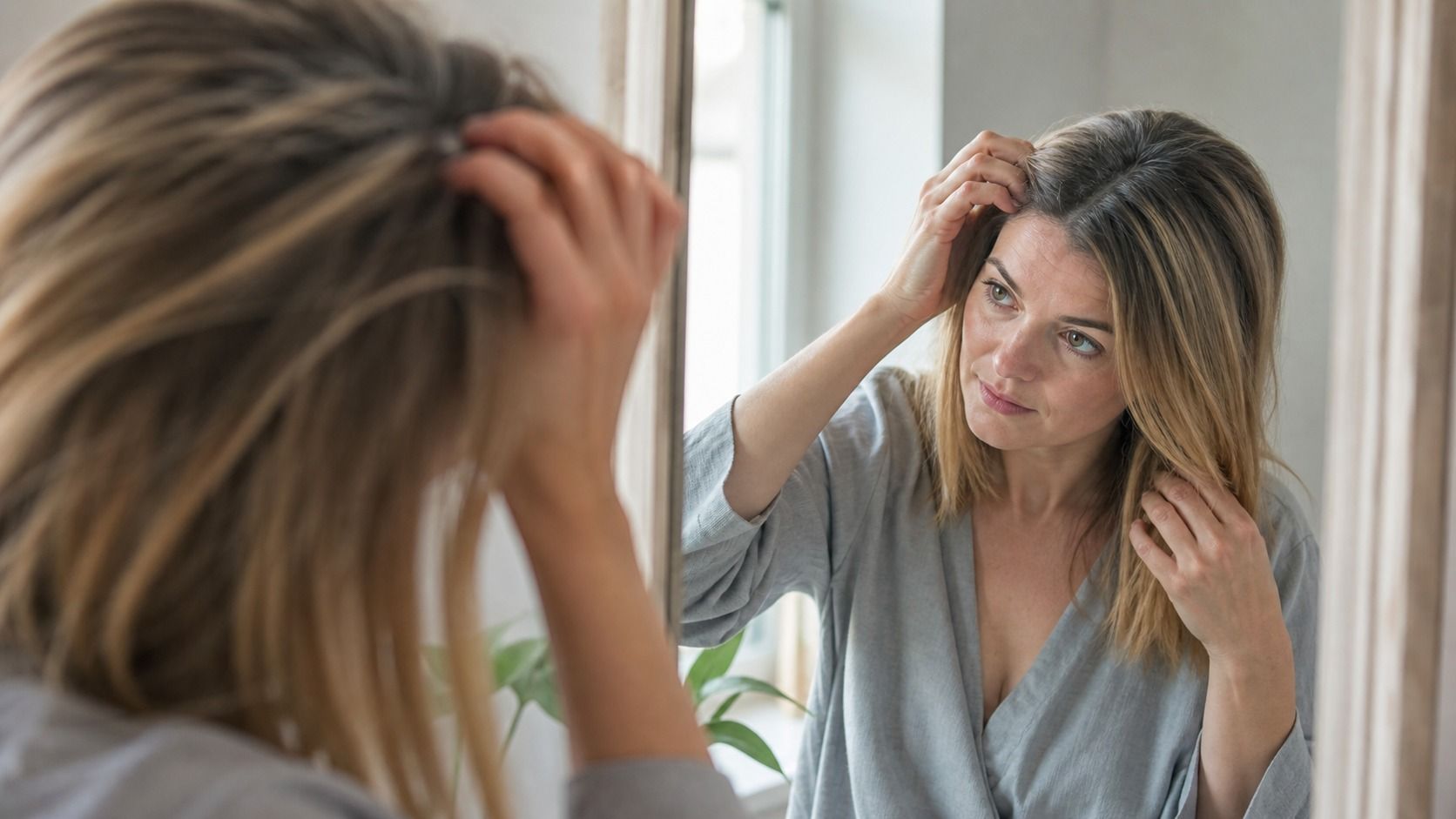
Stand back from the mirror far enough to see the whole face. Squint slightly if that helps you ignore individual strands. Do the roots read pale blonde, dark blonde, light brown, medium brown, or deep brown? You do not need a precise salon level. You need a rough starting point before you try a shade two or three steps away. Compare screenshots at normal viewing size, not zoomed in on the shine.
If you have natural medium brown roots and soft brows, a near-black gloss may feel exciting in a colour chart but create a hard line around the face. If you have deep eyes and strong brows, the same depth may look perfectly settled. The test is whether your eyes remain present. Hair should not have to become the only feature anyone sees when you walk into a room.
Use contrast as a practical editing tool
Contrast is the light-dark difference between your skin, eyes, brows, and hair. It is easier to spot in a black-and-white phone photo. Turn one daylight portrait monochrome and look at the broad shapes. Are the brows and eyes clearly darker than the skin? Does the hair form a strong frame? Or does everything sit in a gentle middle range? This gives you a cleaner starting point than guessing from hair colour names.
Low contrast colouring often tolerates blended, softly dimensional colour well: beige highlights, muted brunette, gentle root melts, or a face frame that is only a little lighter than the base. High contrast colouring can carry deeper brunette, richer red, bolder highlights, or stronger brow-to-hair definition. Still, there is a catch. A higher-contrast person can look striking in black, but black is unforgiving when regrowth appears or the face is tired. The question is not only whether it works in a photo; it is whether you want that maintenance.
| At-home observation | What it may suggest | A useful next comparison |
|---|---|---|
| Brows and eyes look soft in black and white | Lower contrast may be more natural | Beige or neutral shades beside very dark brown |
| Dark brows stay visible from across the room | You may carry more depth or clarity | Deep chestnut beside medium neutral brown |
| Gold fabric improves the jaw area | Some warmth may be welcome | Honey-beige beside ash blonde at the same depth |
| Both warm and cool fabrics look fine | Neutral tones may give you flexibility | Muted shades before highly saturated ones |
Compare hair colour with your eye colour and everyday clothes
Eye colour is not a command to choose a matching shade, but it can reveal which colours wake up the face. Green or hazel eyes may look clearer beside soft copper, chestnut, or neutral brown. Blue or grey eyes can gain definition beside cool brunette, beige blonde, or a restrained warm shade. Brown eyes often handle a wide range, so skin warmth and contrast usually matter more. Watch the whole face rather than chasing a single eye-colour trick.
Your wardrobe is a useful archive of tests you have already done. Pull out two tops you wear repeatedly because strangers say you look well in them, plus two you avoid despite liking the colour on the hanger. Put them near the face in daylight. The flattering colours can point toward hair families: muted navy and dusty rose may support smoky brown; warm ivory and tomato red may sit happily with golden brown; clear black and white may suggest that you can carry a stronger contrast.
There is no reason to build a rigid palette around this. A person can love cool navy and still want a warm balayage. The home test simply tells you where the friction may be. If a colour choice asks for brighter lipstick, darker brows, and a different wardrobe every time, it may be an occasional look rather than the easiest permanent base.
Use a free hair color analysis result as a prompt, not an authority
A free hair color analysis can be useful when it gives you a few directions to compare, especially if you have trouble seeing your own colouring. It becomes less useful when it assigns a season from one filtered image and announces that every other shade is wrong. Photos change with white balance, makeup, and even the colour of the wall behind you. A result that seems precise may only be precise about a bad photograph.
If an online result calls you cool but your daylight fabric test makes soft gold look better, trust the evidence in front of you. Repeat the test on another day if you are unsure. It is normal for observations to be mixed, particularly after a holiday tan, during a skin flare-up, or when dyed hair has shifted warm over time. The aim is to identify a stable pattern, not to win an argument with an app.
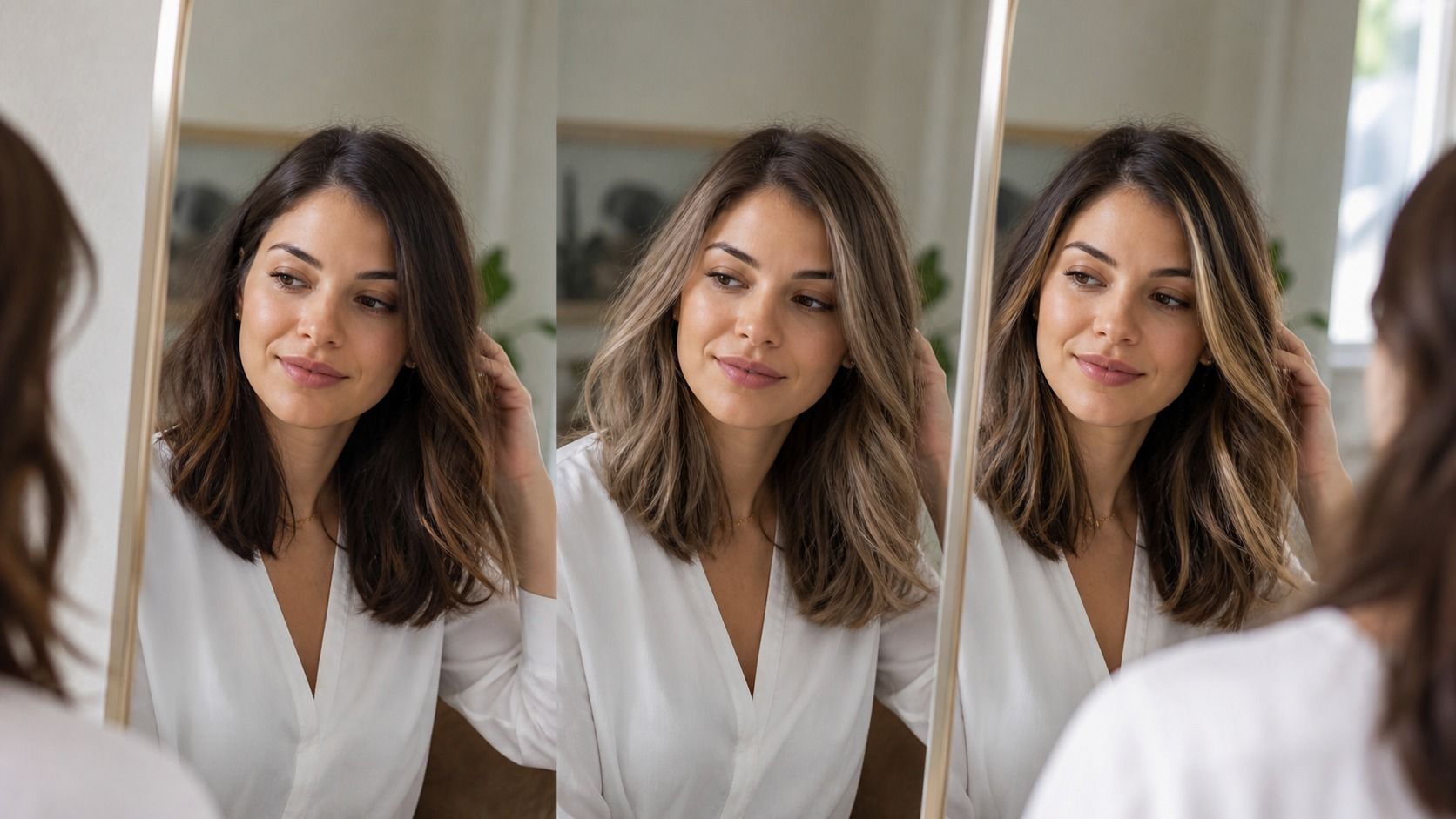
Save three hair options rather than one: a safe choice close to your natural depth, a moderate change, and the adventurous option. Put each beside the same no-makeup daylight photo. This makes it easier to say what you actually prefer: more warmth but less brightness, more depth but not black, or a softer face frame without changing the base.
Know when your evidence is too mixed for a confident call
Sometimes the mirror test produces no clear winner. Both gold and silver look acceptable. Your roots are cool but the lengths are warm from years of colour. Your eyes look different in every room. That does not mean the process failed. It means a dramatic all-over change is a poor first move. Choose a lower-risk experiment such as a toner, gloss, a few painted pieces, or a subtle face frame at your existing depth.
Hair history matters here. Bleach, permanent dye, henna, hard water, and porous ends can change the result far more than a seasonal label. A stylist may need to do a strand test or adjust the formula across different parts of the head. Bring the daylight photos and explain what you noticed, but be honest about previous colour. The most reliable hair colour analysis at home is the one that helps you ask better questions, not the one that pretends it can predict chemistry.
After all the checking, pick the option that still looks like you in ordinary light. It may be less dramatic than the first virtual preview. It is also more likely to feel right after the salon shine fades, the hair is tied back, and you catch your reflection in a supermarket window.