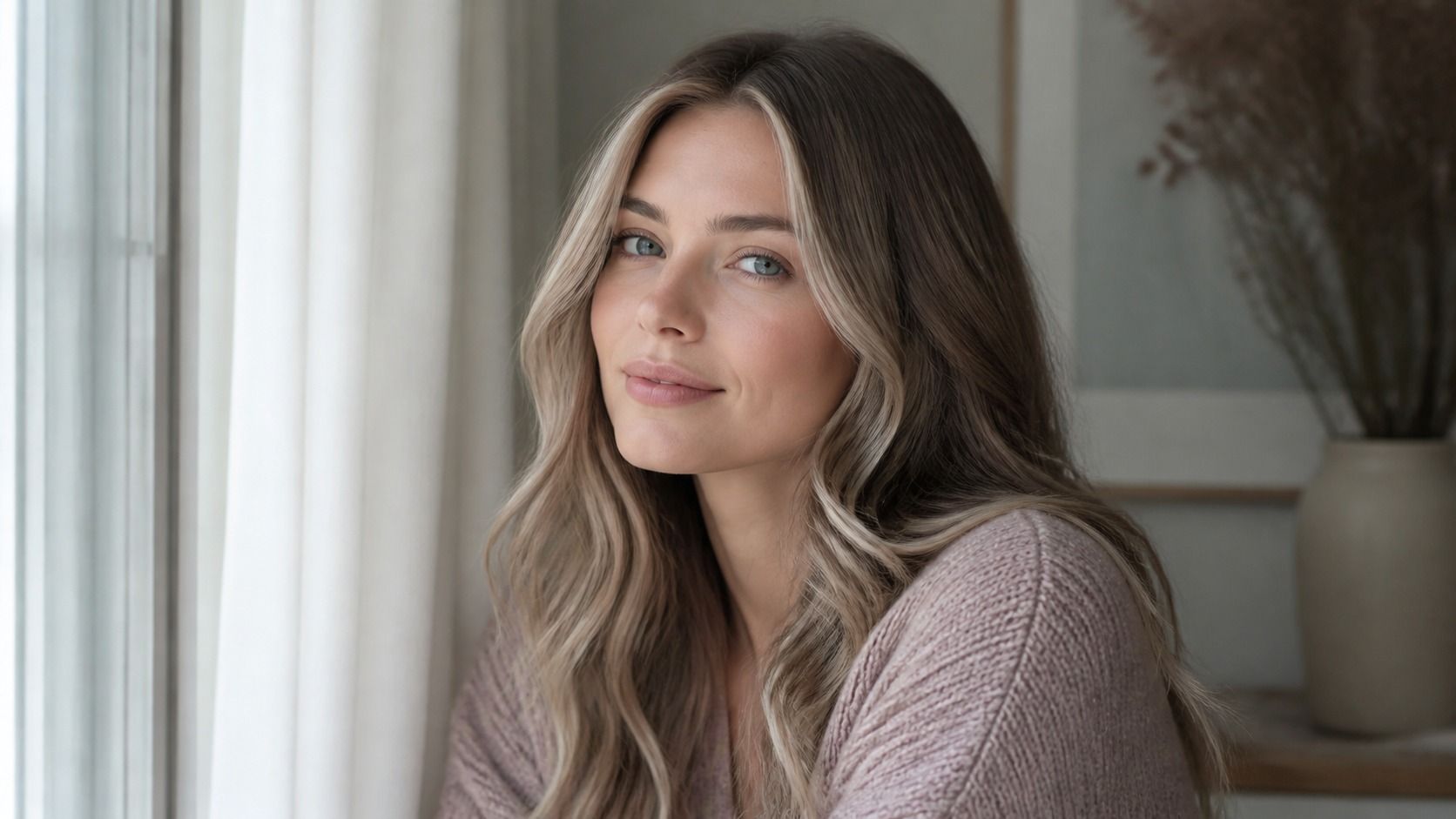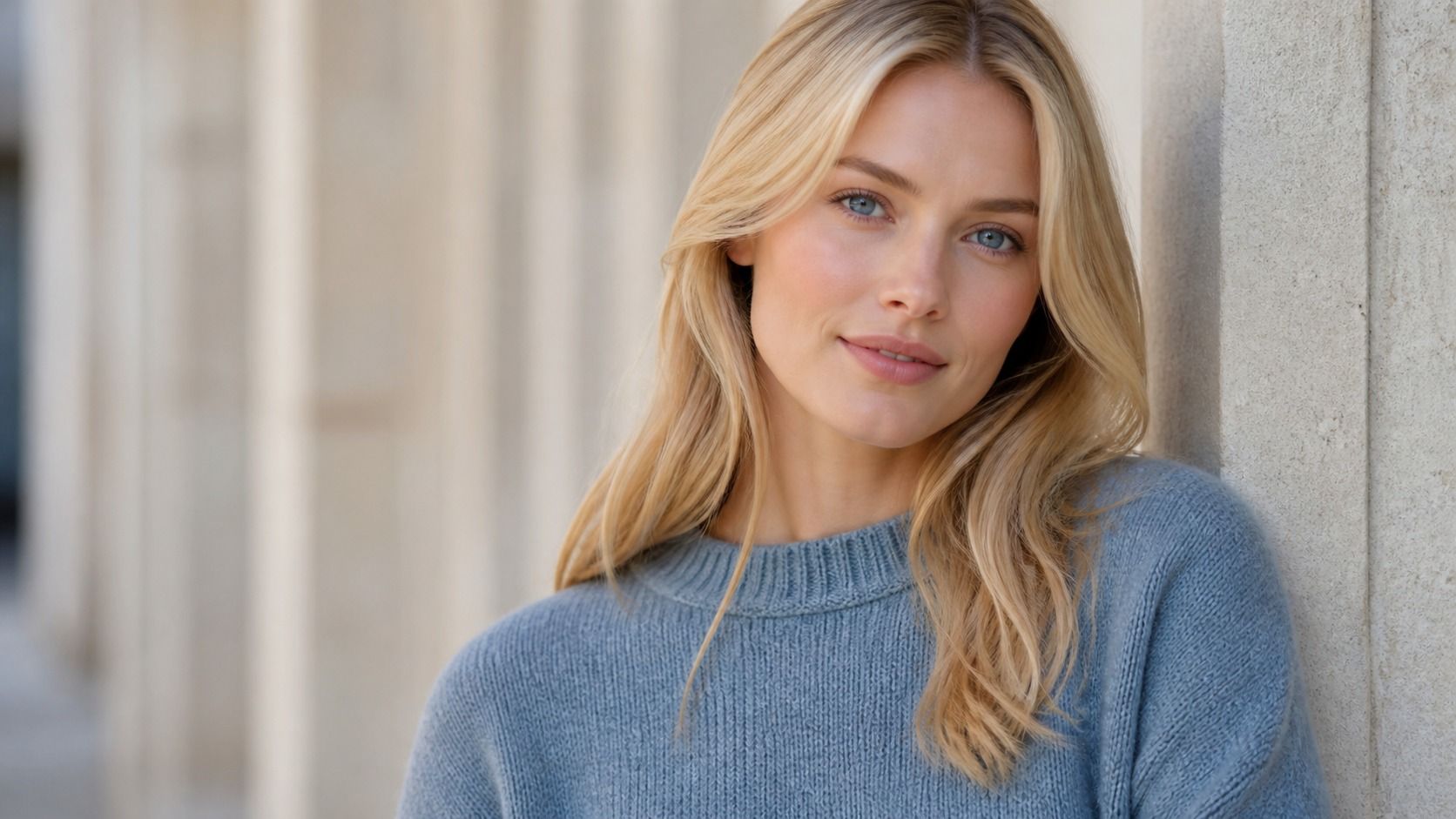
Blonde hair, blue eyes, and fair skin are a useful description, but they are not a wardrobe prescription. Two people with that combination can look completely different in the same navy sweater: one looks awake and polished, the other looks a little drained. Undertone, hair depth, and the amount of contrast in your features decide far more than eye colour alone, so the aim is to notice what your face does next to a colour.
Use the description as a starting point, not a colour season verdict
Fair skin can be pink, peach, olive-leaning, neutral, or a mixture that changes with the season. Blonde hair can be wheat, ash, beige, strawberry, or dark enough to look almost light brown indoors. Blue eyes range from icy grey-blue to deep navy. This is why a search for the best clothing colors for blonde hair, blue eyes fair skin often produces a pile of conflicting advice. The people giving it are usually talking about different versions of the same description.
Find the temperature that makes your skin look even
Cool-leaning fair skin often responds well to blue-based colours: soft navy, slate, berry, cool pink, smoky lavender, and blue-grey. They can make redness look less obvious and pick up blue or grey eyes without turning the outfit into a costume. If bright royal blue feels too sharp, move toward dusty blue instead. The difference is saturation, not a failure to be cool enough.
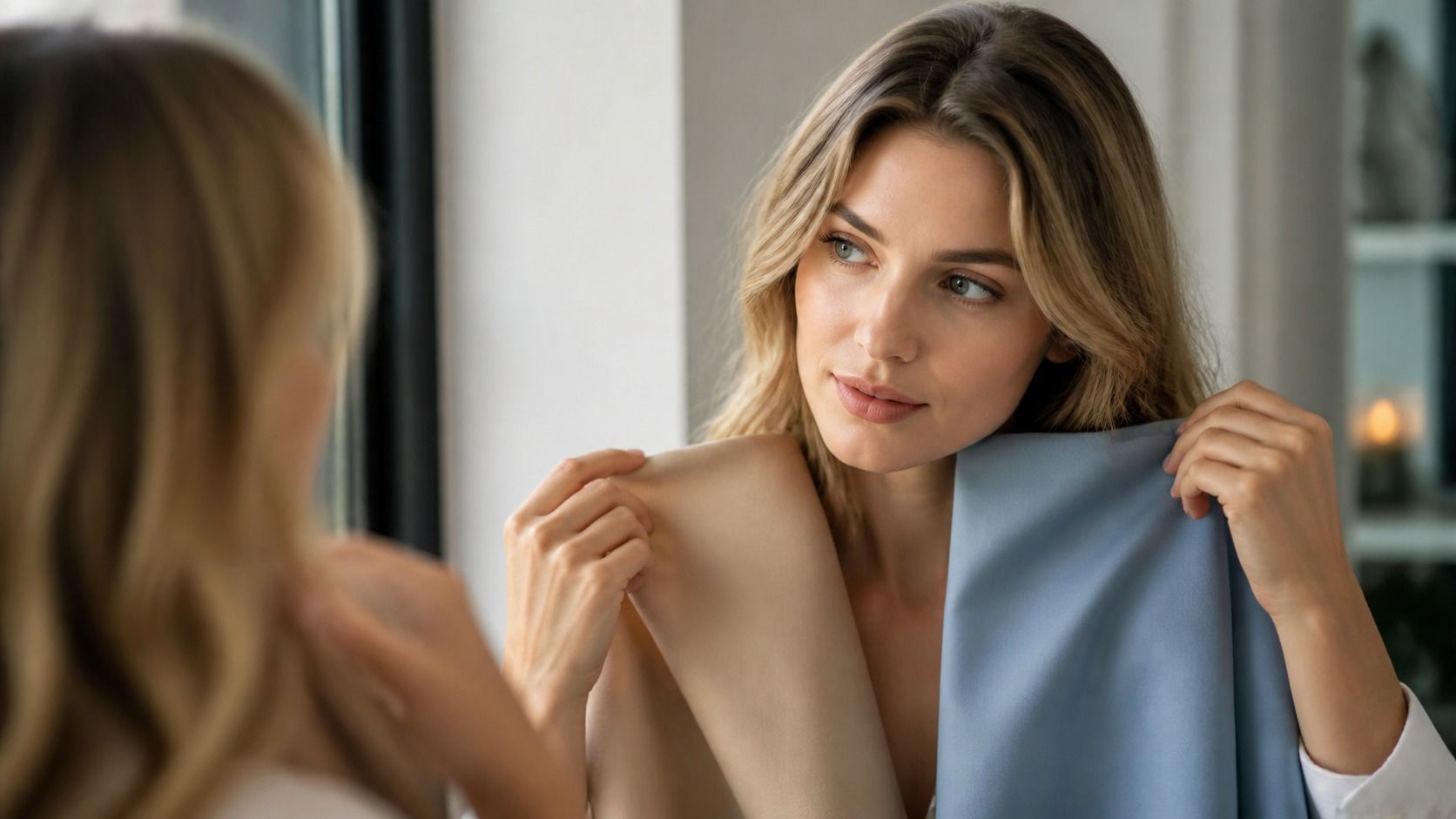
Warm or neutral-warm skin may look fresher in softened coral, muted teal, camel, warm ivory, sage, or a rose with a little peach in it. The easy mistake is assuming fair skin must wear icy pastels. An icy lilac top can make a warm blonde and peachy skin look oddly separate. Put soft cream beside your face as a test. If it makes you look healthy where optic white makes you look tired, there is probably warmth worth respecting.
Build contrast without letting black take over
Black is practical and familiar, but it is not automatically flattering on fair, low-contrast colouring. Against pale skin and light blonde hair, a black crew neck can sit in the room before the person does. That does not mean you need to ban it. Put black farther from the face, wear it as trousers or boots, or soften it with an open neckline, a scarf, or earrings that echo your skin tone.
Navy is often the easier dark neutral, especially a softened ink navy rather than a nearly black one. Charcoal, mushroom taupe, muted espresso, and deep petrol can work too. The right option depends on hair color analysis: an ash blonde may handle charcoal beautifully, while a golden blonde can look better with a softened brown. Try the dark colour in a changing-room mirror near a window. Department-store lighting is fond of making every dark neutral look equally plausible.
| Colour direction | Try it when | Check before buying |
|---|---|---|
| Soft navy or slate | You want a dark neutral without black's severity | It should not turn your skin grey |
| Dusty blue or smoky teal | Your eyes are blue or grey-blue and your contrast is gentle | Make sure it does not look faded beside your hair |
| Soft white or cream | You need a light neutral near the face | Compare both; one will usually look calmer |
| Coral or warm rose | Your skin has peach or golden warmth | Keep it muted if bright orange dominates |
| Berry or cool pink | Your skin is pink or neutral-cool | Choose a depth that does not overpower light hair |
Choose pale colours by depth as well as undertone
Pale colours can be trickier than dark ones because they have less room to hide. Very light blonde hair with fair skin may need a little depth in a shirt or knitwear: misty blue, soft rose, denim, eucalyptus, or medium periwinkle can define the face better than baby blue. A pale colour should not make your eyebrows seem to vanish. That is a useful, surprisingly reliable signal.
If your blonde is darker, rooted, or more beige, you may be able to wear clearer light colours. Pale aqua, cool lilac, light raspberry, or a clean cream can give enough contrast. The colour analysis hair approach is less about collecting flattering shades and more about learning the boundary. When a pastel is too close to your skin, it can make the face look unfinished. Choose the next darker version rather than abandoning the whole colour family.
Let jewellery settle the argument when colours feel close
Jewellery is a quick test because it sits right beside the face. Silver, white gold, and pewter often make cool or neutral-cool blonde colouring look clean and calm. Yellow gold can be better on warmer blonde hair or peachy fair skin, especially when a pale gold chain gives the same glow as a cream neckline. Rose gold is often friendly to neutral skin, although very pink rose gold can pull red out of the cheeks.
There is no need to treat this as a loyalty test. Plenty of people look good in more than one metal, particularly when their hair has both ash and beige tones. Notice which metal makes the whites of your eyes look clearer and which one emphasises texture or redness. Then use that answer for the jewellery closest to your face, while letting bags, belts, and watches be more flexible.
Make hair and clothing colour cooperate before a salon change
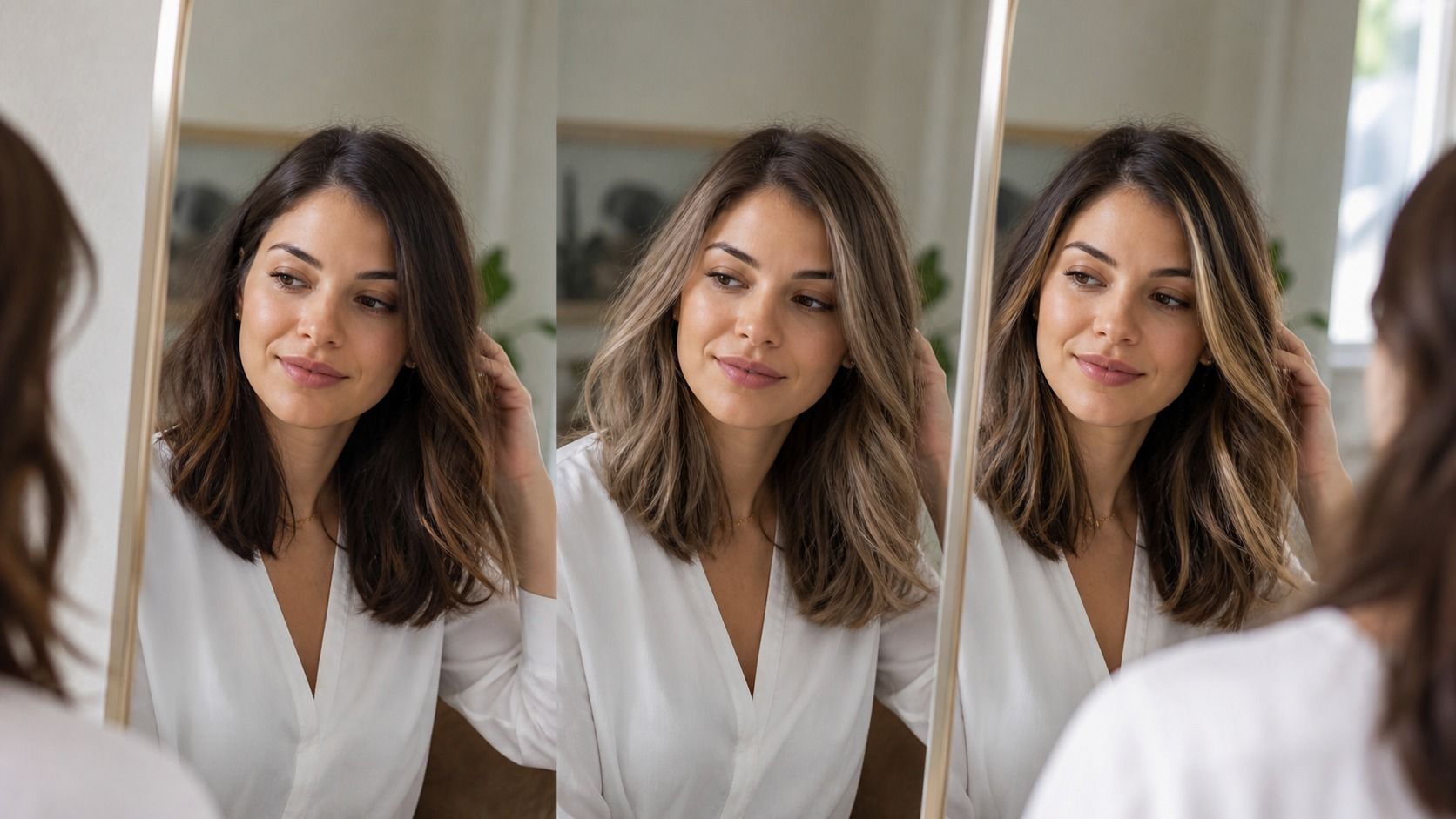
A new hair colour can shift the wardrobe colours that feel easiest. Going from buttery blonde to a cooler beige blonde may make soft navy, smoky pink, and grey-blue look suddenly more natural. Adding warm golden highlights may pull you toward cream, moss, coral, and warm denim. You do not need a new wardrobe after a salon appointment, but it is worth trying familiar tops again before deciding the hair colour was a mistake.
For a virtual hair preview, put on the kind of top you really wear, not a filter-perfect white shirt. Compare the result with a navy and a cream neckline, then with one colour you own often. The preview is useful when it reveals a clash early: perhaps your planned platinum blonde makes all your favourite camel jumpers look wrong, or a warmer gloss makes your blue wardrobe feel more harmonious. That is practical information, and it is kinder to your budget than finding out after the toner has set.