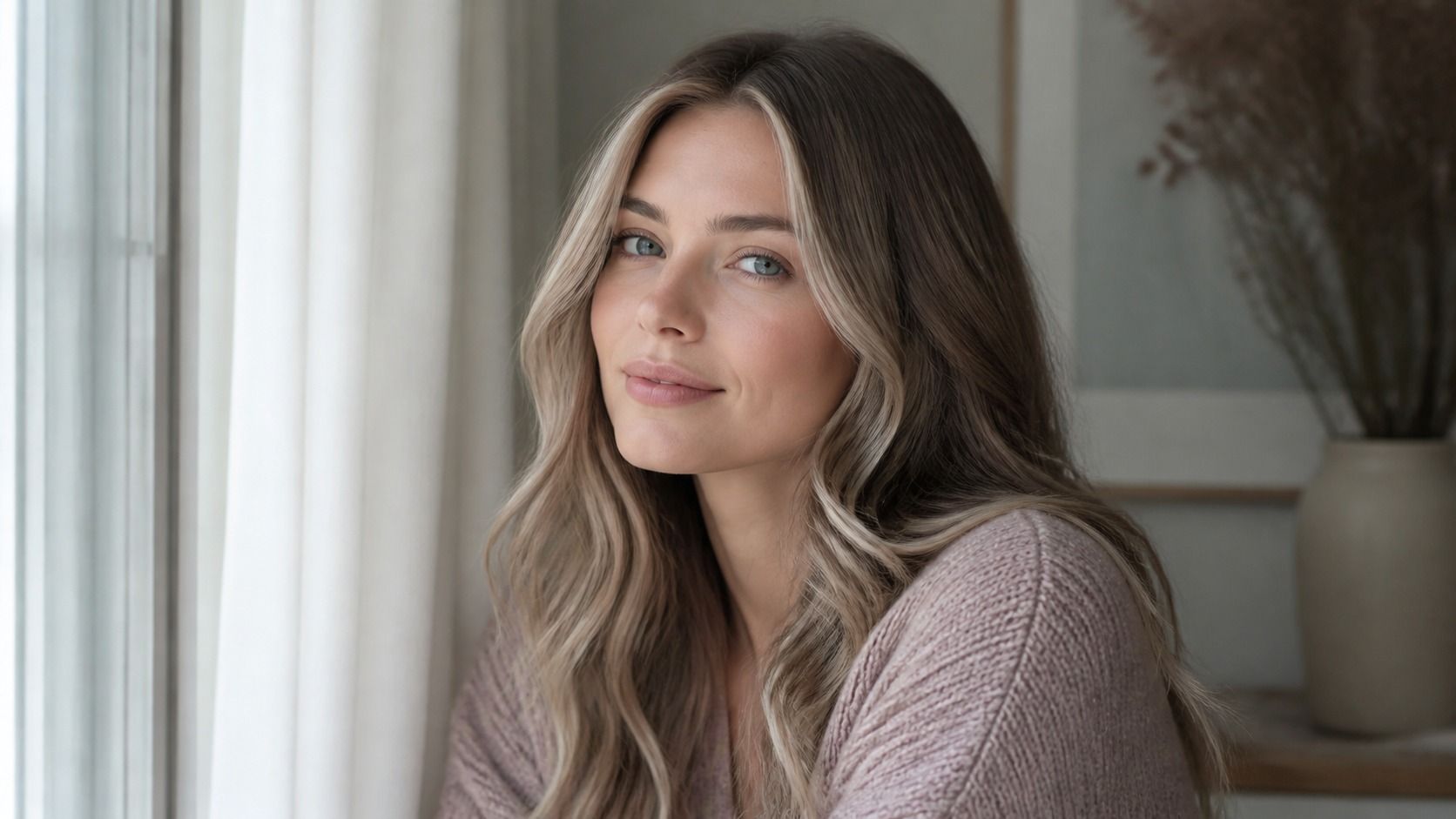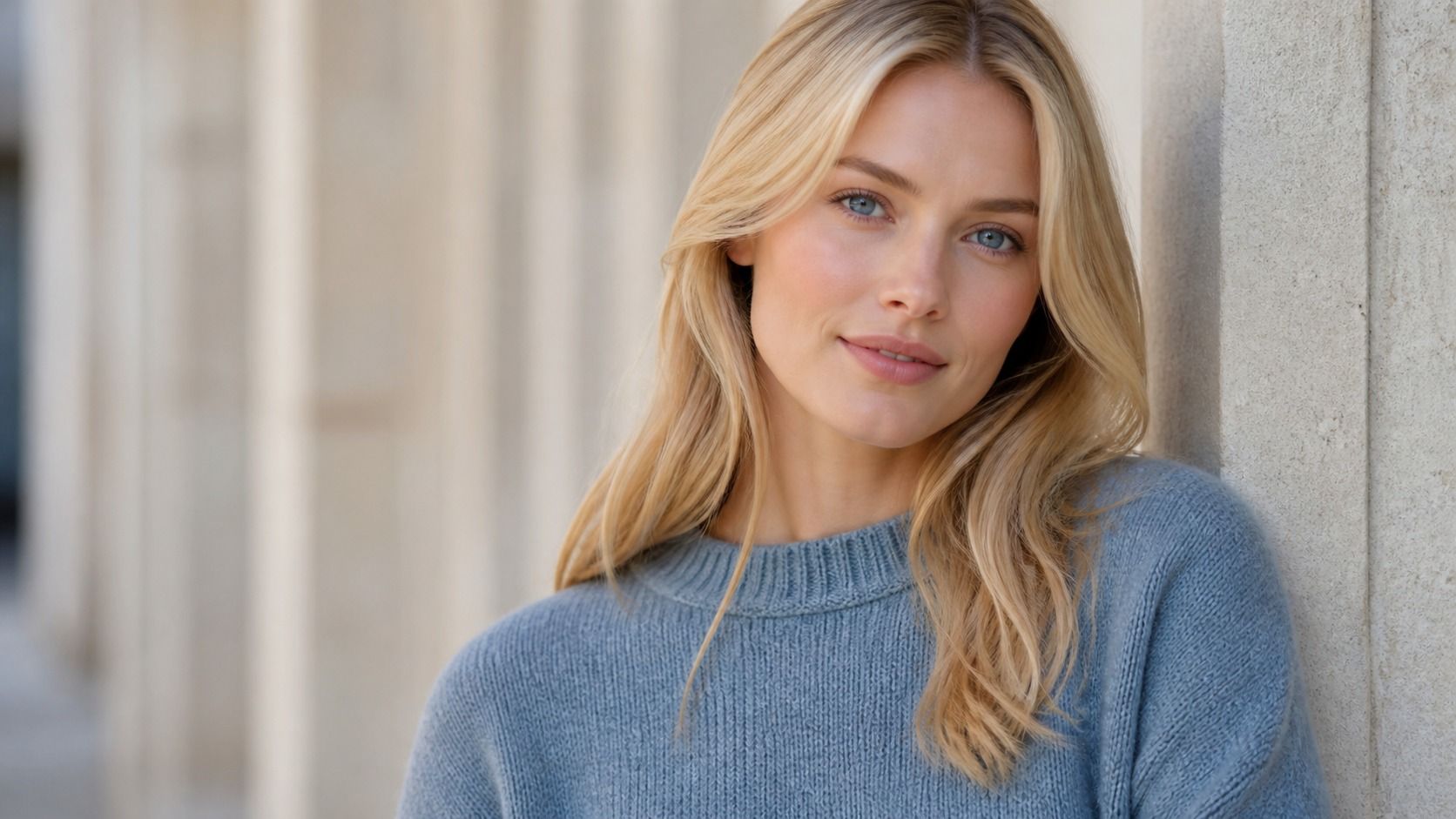
You do not need a quiz with a suspiciously certain answer to begin a free hair color analysis. You need a few honest photos, a mirror, and enough distance from the latest colour trend to see your own features again. The method below will not replace a colourist who can inspect old dye and hair condition, but it can stop you from arriving with a reference that was never going to suit your face or your routine.
Know what a home analysis can answer
A home check is good at comparison. It can show that medium ash brown looks calmer beside your skin than golden brown, or that a light face frame brightens you more than an all-over blonde. It can also reveal that the “dark brunette” photo you saved is really a styling photo, full of shadows and volume, rather than a useful colour reference.
Take one set of daylight photos before doing anything else
Stand facing a window with indirect daylight. A cloudy day works well because bright direct sun adds its own colour and hides unevenness. Keep the camera at eye height and turn off beauty filters, portrait smoothing, and coloured screen settings. Take one photo with your hair down, one with it pulled back, and one with the parting visible. The roots matter more than the faded ends when you are working out your natural baseline.
Wear a plain grey, off-white, or muted blue top if you can. A bright orange sweatshirt or a black turtleneck changes the apparent contrast around the jaw. Look for three things in the photos: whether the roots read warm, cool, or somewhere between; how strong the brows look; and whether your face has delicate or pronounced contrast. Write those observations down. Memory becomes surprisingly unreliable once twenty saved colour photos are involved.
Read the roots, brows and skin together
Natural roots are often described as a single shade, but most people have several notes there: ash at the scalp, a little warmth through the mid-lengths, and lighter pieces around the temples. Do not magnify one strand under a bathroom bulb. Step back, then compare the whole root area with your brows. If the brows are soft taupe and the roots are medium neutral brown, a near-black dye is a large jump even if it looks polished on somebody else.
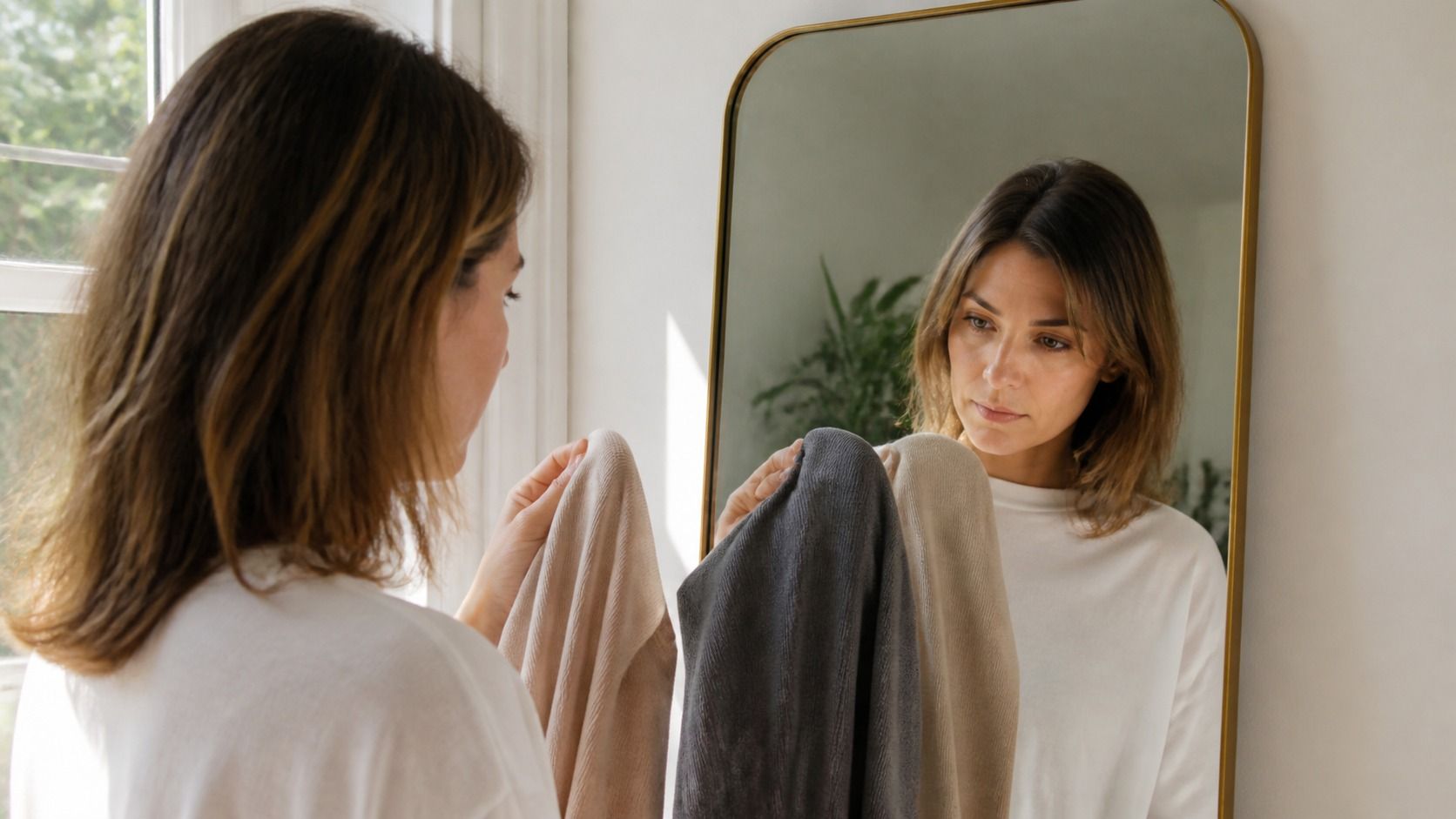
For undertone, use a plain white sheet of paper only as a neutral neighbour, not as a test that must produce a dramatic answer. Skin can look peachy, olive, pink, or neutral depending on sleep, weather, and camera exposure. The useful clue is what changes when you place warm and cool fabrics or swatches next to the jaw. One usually makes the skin look more even. The other tends to bring out surface redness or a yellow-grey cast.
Compare pairs, not a wall of swatches
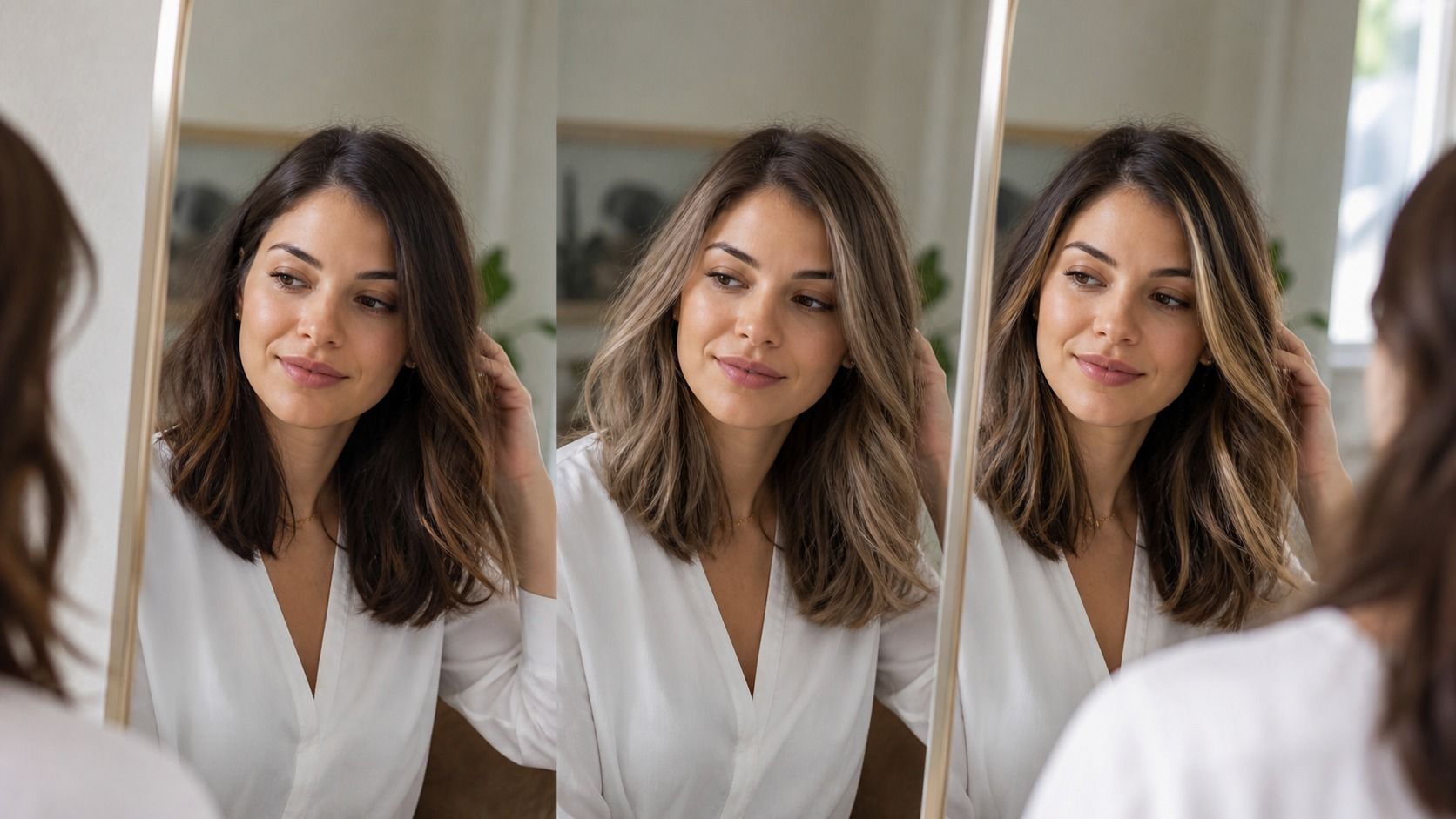
Put together two colour directions that differ in one clear way. For blondes, try beige against ash, then muted honey against golden blonde. For brunettes, compare neutral chestnut with ash brown, then soft espresso with almost-black. For red-leaning shades, compare cinnamon with copper rather than trying to judge every red in the salon book at once. A pair gives your eyes a job. Twenty swatches just produce fatigue.
| Pair to compare | Ask yourself | A useful next move |
|---|---|---|
| Beige blonde / pale ash blonde | Which one leaves the skin clearer near the nose and chin? | Keep the better one as a face-frame option |
| Neutral chestnut / ash brown | Which one works with the natural root rather than against it? | Choose a gloss or lowlights before an all-over dye |
| Muted cinnamon / bright copper | Does the colour arrive before you notice the eyes? | Reduce brightness, not necessarily warmth |
| Dark blonde / medium brown | Which level keeps brows and eyes in the picture? | Ask for a root shadow if you want to go lighter |
Take a screen-free break after each pair. Come back later and look at the images at a normal size, not zoomed in. If you keep choosing the same direction without having to argue for it, that is more persuasive than a rigid seasonal label.
Use a virtual try-on as a second opinion
A virtual try-on is useful when it is treated like a rough fitting room. Start with a clear photo: hair away from the face, even window light, no sunglasses, and no filter. Test only a few shades drawn from the pairs you already compared. If you start with every possible colour, the tool becomes entertainment and tells you very little about a real choice.
Watch the hairline, brows, and area beneath the eyes rather than the glossy lengths. Digital colour often makes reds and blondes look cleaner than they will look on porous hair, and it cannot show the cost of lifting a dark base. Still, it can expose a bad contrast quickly. A shade may look fun in a tiny preview and strangely helmet-like once you see it beside your own forehead. That is useful information, even if the final salon formula is different.
Turn the result into a small salon note
By this point, make a list with three parts: your natural starting point, your preferred direction, and your deal-breakers. For example: “natural medium neutral brown, want a cooler and slightly lighter result, no obvious gold at the front, keep some depth at the root.” That is enough to open a productive consultation. A colourist can ask follow-up questions about old highlights, henna, scalp sensitivity, and how often you will return.
Bring the daylight photo as well as the reference image. The first shows what needs to work with your colouring; the second shows the mood you like. If those two pictures pull in opposite directions, say so. A good plan may borrow the softness of one photo and the depth of the other instead of copying either one exactly.
Make the first dye decision reversible
When your evidence points toward a new direction but you are still unsure, choose a test that fades or grows out gracefully. A toner, gloss, blended highlights, lowlights, or a few restrained face-framing pieces can answer more than a full transformation. Check how it behaves after two home washes. Does the warmth still feel right? Are the roots suddenly too severe? Does your usual makeup look like it belongs with the hair?
Keep a photo diary for a fortnight in daylight, office light, and evening light. That sounds fussy, but it prevents an expensive correction based on one bad mirror moment. Hair color analysis works best as a record of what you saw, not as a promise that one category will make every choice for you. The aim is a colour you recognise as yours when the salon blow-dry has worn off.